-
Handbook of Research on User Experience in Web 2.0 Technologies and Its Impact on Universities and Businesses
Description
As various areas of discipline continue to progress into the digital age, diverse modes of technology are being experimented with and ultimately implemented into common practices. Mobile products and interactive devices, specifically, are being tested within educational environments as well as corporate business in support of online learning and e-commerce initiatives. There is a boundless stock of factors that play a role in successfully implementing web technologies and user-driven learning strategies, which require substantial research for executives and administrators in these fields.
The Handbook of Research on User Experience in Web 2.0 Technologies and Its Impact on Universities and Businesses is an essential reference source that presents research on the strategic role of user experience in e-learning and e-commerce at the level of the global economy, networks and organizations, teams and work groups, and information systems. The book assesses the impact of e-learning and e-commerce technologies on different organizations, including higher education institutions, multinational corporations, health providers, and business companies. Featuring research on topics such as ubiquitous interfaces, computer graphics, and image processing, this book is ideally designed for program developers and designers, researchers, practitioners, IT professionals, executives, academicians, and students.
Read more about my contribution in this Handbook of Research here.
Chapter 11
Customer Experience: The New Competitive Advantage for Companies That Want Their Customer at the Center of Their Business
Ilenia Vidili (The Smarter Crew, Italy) -

Consumer behaviour change #4: “Home is where I feel safe”
Number four of my consumer behaviour changes after COVID series is called “Home is where I feel safe”. People around the world have been told to self isolate so returned in mass to their epicentre of life and realised that staying at home is not that bad. We took for granted how comfortable it was to stay at home right? Consumers have been injected with the fear of the virus which has led them to prefer to stay at home even in phase two of this global lockdown. During and after quarantine they have been virtually connecting more than ever even when apart so this is leading to think that “Home is where I feel safe”. Going forward we will not see the lockdown extreme but consumers are changing some of their habits for sure. There will be a lot of social distancing for now and beyond, people are afraid and putting their health as their priority. Fear is injected into us, therefore a lot of industries are going to suffer over the next 18-24 months because people will have fear of travelling, eating out and staying in crowded places.
Millions of people around the world have lost their job and businesses but the majority of people transitioned to remote work during the outbreak. The interesting thing is that this relates to businesses as well. Most companies in every industry have replaced long commutes with video communication platforms and remote work tools without feeling any urgency to go back to the old ways. Will this be the end of useless face-to-face meetings and will it be the start of a work-from-home culture? Remote work is expected to become more widespread and finally more accepted by employers. Two weeks ago, Facebookannounced that most of its employees will be working from home through the end of 2020 and Google’s parent company Alphabet planned the same.
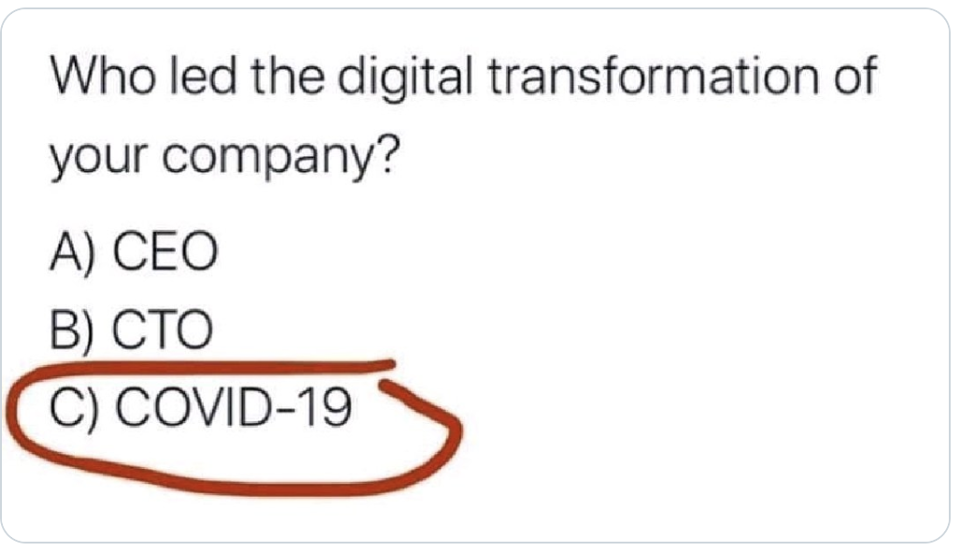
In the first article of this series, I mentioned that COVID was the push that companies needed to finally embrace the technology available out there. My view is that this is the time where companies really require continuity and not only via video conferencing but through a whole digital transformation that creates agile working environments which allows them to respond quickly to the ever-evolving consumer needs. I found this image on the internet and thought it was very intriguing and possibly real for many organisations.
What should businesses do about it?
As consumers are and will be spending more time at home it makes sense that you shift your communication and messaging more around the home, but most importantly that you bring your business to people’s home, where they feel safe. Digital transformation is integrating technology in every area of the business to solve traditional problems, but digital transformation on its own doesn’t mean much if businesses aren’t putting customers at the centre. Most companies see digital transformation as a way of using technology to create operational efficiencies that reduce costs. While that’s an important goal as well, very often the same companies pay the price of losing customers who have gone through a bad customer experience. Digital transformation initiatives must start with the customer experience in mind because competitive advantages as a result of customer experience strategies attract customers who then become advocates which is equal to recurring revenue. In his book The Practice of Management, Peter Drucker said,
“The purpose of a business is to create a customer.”
I would add that the purpose of a business is also to provide an unprecedented value to customers. Now it is the time to reassess digital initiatives and implement those that provide value to customers and that will help you stay close to their needs during and post COVID. The most successful digital transformations begin with the customer experience and are focused on having the customer at the centre. Customer data is used to inform decisions and apply a design thinking approach built on flexible and modern platforms that create superior customer experiences. Digital transformation is not an easy process, it takes time, dedication and consistency but there is a silver lining in any adversity — COVID-19 may be the right push that you need.
More consumer expectation changes in the next article. If you missed my latest customer experience webinar: “Adapting Customer Experience in times of COVID and beyond” you can watch the replay by registering your interest here.
-

Consumer behaviour change #3: “My health is my priority”
Number three of my consumer behaviour changes after COVID series is called “My health is my priority”. COVID-19 has not only changed the way we work and carry out our life in general but it has also made people re-think about their health and it has spread a very important message: the fragility of our life!
I would also call this behaviour a sentiment because people are contemplating what their life priorities are as they are coming to the conclusion that they cannot rely solely on their healthcare system but they should prioritise health over anything else. As businesses, we are realising that amidst this growing global health crisis, we can definitely do more for our customers and employees out there. This means that health experiences will be on-demand and also health should be considered in every experience provided by a brand. As a result, every brand will become a healthcare brand and this goes further than installing safety measures imposed by local regulations. Health consciousness will increase in the next few years and should be taken into consideration regardless of the size and sector of a company. Every company in every industry now has an impact on the health of humanity and on the health of their customers.
As we are riding this coronavirus storm many consumers struggle with fear of the unknown and the number of people suffering from anxiety is expected to be incredibly high as we come out of lockdown. Coronavirus is leaving a traumatised society according to Prosper Insights.
- 33% are anxious about contracting the coronavirus and the 18-24 year old are most anxious 36.2% followed by 65+ 33.7%
- 35% worry about running out of household cleaning products followed closely by fresh produce 34.8% and fresh meat/poultry/fish 31.5%
Cleanliness is becoming a preoccupation likely to stay along with sanitisers remaining a daily way of life. I remember reading an article by the Insider talking about the cleaning obsession of Naomi Campbell and how people were ridiculing her for it. If this was a crazy thing to do before, now it will become the “new normal”. Are masks going to stay? Maybe yes and maybe we need to provide them to customers visiting stores, restaurants, cinemas etc.
Sentinel Healthcare is a new start-up in the US that uses an app to monitor consumers health remotely. This is a company that very quickly responded to the crisis by developing a fever tracking app involving connecting a wireless monitor that sends real-time updates about individuals to the medical systems healthcare provider, GP etc. Providing this personal solution not only appeals to the consumers’ desires to have their health tracked but it also lowers the data sharing barriers that consumers and patients have been worrying for some time.
What should businesses do about it?
Run an experience health check, not in terms of how healthy your CX is (also that) but in terms of how you can eliminate the concerns of your customers. With the new cleaning, safety and security issues you will need to start accepting the “end” of your old customer experience. You should now consider developing an experience that is frictionless, convenient, digital, omnichannel but also more than ever, safe. COVID-19 is reshaping new habits and lifestyles for everyone and you should figure out ways to win customers that now have new mindsets. If you are a retailer it is about time to offer healthier products by providing both alternatives: healthy and less healthy. If you are a restaurant or a coffee shop you will be challenged in making healthier food providing calorie consumption information for each dish and perhaps offering a whole set of healthy menus. As mentioned earlier in this article, we are not only talking about our customers’ physical health but most importantly we should consider the importance of mental health. If you are a media company you should start thinking about offering mental health programs and this is something that all social media giants should do as well, regardless of the age groups. The mental health consequences of this pandemic are only starting to show up in 2020 but what will they be in the coming years?
There might be a huge increase in suicides from people who are having and will have financial struggles during and after COVID. If you are in the financial service sector how can you help the mental health of your customers? This is not only a humanitarian crisis but also the deepest economic crisis after the Great depression. This is your time to consider what role your product and service can play in the “health economy” and build this into your brand as either a core part of it or a part of the promise. Re-thinking and re-shaping your customer experience considering the “health factor” will build and strengthen a very important CX dimension that I talked about in my previous article here and here: TRUST, the queen in Customer Experience.
We really want to give our customers a break. Have you been thinking about how your business can have a positive impact on the health of your consumers?
More consumer expectation changes in the next article. If you missed my latest customer experience webinar: “Adapting Customer Experience in times of COVID and beyond” you can watch the replay by registering your interest here.
-

Consumer Expectations Changes After COVID And How To Adapt Your Customer Experience
In a short period of time, this virus has completely revolutionised the lives of our consumers, employees, leaders and everyone out there around the world. But despite all these incredible overnight changes, life seems to be carrying on in different and uncertain circumstances. Although this crisis is changing a lot of things, your customer-brand relationship is more important than ever. We know that customer experience is the way to differentiate companies in a highly competitive environment where products and services are nearly the same.
During COVID-19 the challenge is not only to try to be different but to pivot, innovate and transform. This pandemic will have a long-lasting impact in the mind of customers but companies will have the opportunity to have a long-lasting impact in consumers’ lives. In a recent interview historian, philosopher and best-selling author Yuval Noah Harari mentioned that COVID-19 is the accelerator of where society and businesses would have been in many years’ time. “Mr” Corona has infected over 4.5 million people, with nearly two million recoveries, and 320K global deaths. Did we need all this chaos as the push that companies needed to take advantage of the technology that was available out there for many years? This chaos has traumatised an entire society and will impact forever the lives of millions of people and consumers around the world. Over history, crises have impacted the globe in good and bad ways but one thing is certain: those businesses that resisted digital transformation are now feeling the danger. It is time to act quickly and adapt to the new customer’s mindset. Stéphane Garelli, Professor Emeritus of World Competitiveness at IMD and Professor at the University of Lausanne states that this crisis will last about 18 to 24 months. During this time companies that lead with empathy and genuinely address customer needs can strengthen their relationships.
Starting from today, I am going to share articles on what are the six main consumer behaviour and expectation changes and how companies can address customer’s acute needs today and build stronger ties with them, preparing for the life after COVID-19. These six consumer behaviour changes and recommended actions should be aligned across four different dimensions that will become critical in your customer experience strategy during and after COVID: Digital, Empathy, Trust and Social Responsibility.
Consumer behaviour change #1: Tech and beyond
Consumers have been forced into quarantine, isolation and lockdown and for many that means they had to really reevaluate their life priorities, habits and behaviours. As COVID-19 has dramatically pushed consumers to be more digital we shall expect them to be more accepting of AI, robots and technology in general. Most consumers now accept that technology can help them to do the things that they normally do but in an easier way. Those consumers that were reluctant to go digital will now have to. This is shifting the laggards face-to-face with the virtual world and as they have made the investment in effort, learned new habits and interfaces- many consumers won’t go back.
Coronavirus has accelerated this trend massively and increased the need for cashless and contactless payments as well. It has also created the need for driverless delivery solutions which means that companies will have to quickly invest in these robotic automations to adapt. We will quickly come to the point that consumers will prefer autonomous driver options and will be more confident about using them themselves. This pandemic is moving robotics from novelty to essentials. Infact, in February Meituan Dianping started using autonomous vehicles to deliver grocery orders to its customers in Beijing. The company had already been testing these vehicles back in 2019 but the pandemic has forced it to deploy them early so that they can give consumers ‘no touch’ delivery solutions.
What does it mean for businesses?
- Businesses should accelerate digital options and offer those contactless solutions and deploy “touch and pay” payments–whether from the smartphone or card. Using contactless payment allows people to avoid touching cash and keypads during the COVID-19 pandemic and beyond. This will reduce the possible transmissions of the virus and is a safer way to make payments for both the retailer and the consumer. The mobile phone was the major driver of this trend and COVID-19 has pushed the need for it enormously. What was a futuristic concept before now it’s not futuristic at all. Convenience and safety of payment have been important drivers of excellent customer experience and consumers will be expecting smarter and convenient ways to pay giving retailers the opportunity to capitalise on creating better customer experiences. According to a study carried out by Mastercard, 79% of consumers are using contactless payment solutions with safety and cleanliness as the key needs. In addition, 74% plan to continue to choose contactless after the pandemic.
“Social distancing does not just concern people’s interactions with each other; it includes contact with publicly shared devices like point of sale terminals and checkout counters,”
said Blake Rosenthal, Executive Vice President and Head of Mastercard Acceptance Solutions. “Contactless offers consumers a safer, cleaner way to pay, speed at checkout, and more control over physical proximity at this critical time.” These convenient payment methods provide an opportunity for retailers, restaurants, bars etc to address the current need of consumers to avoid carrying contaminated cash.
- The virtual working, consuming and socializing has created a massive and further shift to virtual activity for anything. For customers that are experiencing the convenience of the virtual way of doing things means that anything that can be done virtually will be. It is more important than ever to alienate any obstacle of going virtual, from banking to online shopping. Retailers are experiencing a high demand in “digital shelves” and those that never prioritised the need for e-commerce channels before are left behind. As you are virtualising your experience make sure that you provide it with frictionless processes, convenience and ease of use. Most importantly make sure that both your virtual and real experiences cohesist and complement one another.
My feeling is that a craving for “real” will also build up soon and the value and notion of “real” may increase drastically.
.
More consumer expectation changes in the next article. If you missed my latest customer experience webinar: “Adapting Customer Experience in times of COVID and beyond” you can watch the replay by registering your interest here.
-

Top 3 industries influenced by the digital disruption
How does a small young company beat an industry giant on its own turf?
Usually, this happens when smaller and more agile companies use new technologies and business models to completely change the way an industry works, affecting the value proposition and systems of an established business. For incumbents, there is a real need to respond very quickly to these changes, taking a digital approach and looking at how technology can be used to change and improve the way a business operates. Blending both business and technology it would be an inevitable essential shift toward digitalisation. However big brands often adopt a “wait and see” response to the digital tsunami making it very difficult to catch-up when the disruption occurred.
A recent study by the Global Center for Digital Business Transformation (DBT Center) showed that industry leaders expect up to 40% of incumbent businesses to be out of business by digital disruptors by 2020.
It is no doubt that companies are now experiencing the fourth industrial revolution, also referred to as industry 4.0, which is affecting almost every industry globally and creating massive changes at revolutionary speed.
This new phenomenon, however, is taking place on a society-wide level to the point that social media, hyper-connectivity and the advent of digital smart devices have created the modern consumer or what is also called the digital consumer. New digital businesses are completely transforming how people work, eat, play, buy, communicate and build relationships.
Disruption is affecting different industries in different ways. Here are the three top industries that are most impacted:
-
Retail
The retail sector is one of the most disrupted industries to date. Due to technology advancement, the dynamics of consumer behaviour are changing. Consumers now spend more time researching online and switching from one screen to the other. Digital consumers are now looking for brands that can offer experiences at any time and anywhere. This phenomenon can be also called “showrooming”, more specifically when consumers go into physical stores to look at or test a product and end up comparing prices and purchasing online.
The major wave of disruption within the retail sector is the digitalisation of the products and of the channels. Before the digital revolution retailers used to sell music or books in a tangible form. Today many shops that historically sold music and books have disappeared because of the digitalisation of these products. On the other hand, the emergence of giant e-commerce stores is continuing to disrupt retailers. However, the digitalisation of channels has allowed retailers to experience exponential growth both online and offline, in fact, according to a research by Forrester it is estimated that by 2022 e-commerce will account for 17 percent of total retail sales, while an additional 41 percent will be digitally influenced offline sales.
-
Financial services
Banks and financial institutions have been quite slow to adopt the much needed digital transformation. They mostly relied on their size and market position to resist as long as possible to the changes. However, after the 2008 credit crunch banks realised that it doesn’t matter how big they are and how much consumers trust them, they can still be heavily disrupted and consumers’ trust can still be highly reduced. Today banks are experiencing heavy competition by Fintech start-ups, the so-called neobanks. These agile companies are branchless and focussed on providing digital-first approach, dedicated to offering a wide experience than a traditional bank; including fast account opening, free debit card, instant payments, cryptocurrencies, lower costs, mobile deposits, P2P payments, mobile budgeting tools, user-friendly interfaces and more.
Industry insiders expect to lose as much as 23% of revenue to agile disruptors (FinTechs) by 2020, according to Whispir.
-
Healthcare
The digital disruption is transforming every industry including healthcare. The healthcare industry is probably the one with less negative effects caused by the revolution and in fact, on the contrary, is seeing major advancements, especially in improved internal processes and increased customer focus. The adoption of IT in the healthcare system is having a massive impact across all areas, for example hospitals have seen a boost in efficiency and quality in the integration of all sides of care, preventing up to 95 percent of adverse drug events, improving diagnosis, monitoring, managing, tracking patient health and reducing costs by 7 to 11 percent, according to Mckinsey.
Artificial Intelligence can elaborate huge amounts of raw data, which can be used to support diagnosing, treating and predicting outcomes in many medical situations.
The essential purpose of the digital transformation within the healthcare industry is, in fact, to provide “agility” that will enhance and refine operational processes, and improve the patient experience while saving lives. Unfortunately, the healthcare industry is still very slow when it comes to implementing digital strategies. People are still very reluctant to using digital when it comes to their medical care. According to a recent survey conducted by Adobe and Econsultancy, only 7 percent of companies said they adopted digital, compared to 15 percent of companies in other industries. It is still a long path that also relies on reliable internet connection, trouble-free and real-time access to information.
Staying competitive means businesses need to constantly innovate around their core processes. It is crucial that all businesses in every industry have a complete and coherent digitalisation strategy in place. The highly competitive digital landscape is forcing incumbents to move to a more digital structure – re-thinking the way they do business. They need to understand their current level of digital maturity and formulate a plan of where they want to be in the digital space.
Digital transformation is a journey made of many steps and the first one is for businesses to understand that they urge the change.
-
-
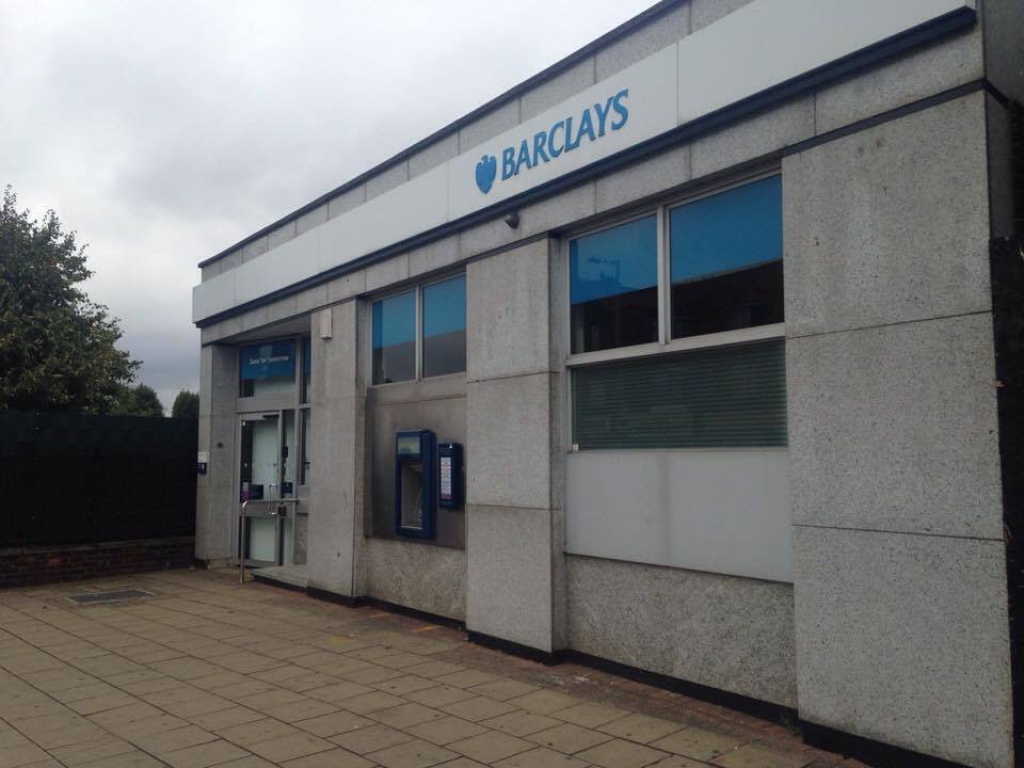
How much time is left for banks? The lost battle of incumbent Barclays vs agile “neobanks”
For centuries banks only cared about moving money and being profitable. Today the banking sector is facing a challenging transformation that keeps banks and financial institutions on their toes.
A few things are reshaping the banking sector to the point that banks need to make it their priority to fundamentally rethink their business model and digitally transform for better value propositions. The advancement in technology and sophistication of the mobile phone is changing the way consumers are storing and managing their financial resources, and dealing with their banks overall. Customer expectations are higher than ever even in the financial space.
Over 100 ‘neobanks’ have launched in the past few years globally. Britain is leading the way in Europe for number of neobanks including Monzo, Revolut and Starling Bank. Monzo alone has opened 1.6m bank accounts to date and Starling Bank offers personal joint accounts as well as business accounts. Neobanks have flourished especially in the United Kingdom and the main reason is because traditional banks are notorious for not offering very effective or high-quality service and for having an aggressive behaviour that over the decades has wrecked individuals and businesses.
The UK’s biggest high-street banks provide the worst customer service to their customers and have a long way to go to become as agile and customer-centric as their competitors’ newcomers. Consumers are still cautious of these new start-ups but fed up of their existing bank’s behaviour. According to a research study carried out by Forbes about the World’s Best Banks, in Britain neobank Starling, employer of only 380 employees and trading since only 2016, ranked in first position while giant and established Barclays ranked in 12th position, out of 15 total banks in Britain (1).
I couldn’t agree more with this, in fact, I too experienced the worst customer service ever with Barclays UK during my holiday in Bali, Indonesia.
My credit card was blocked as a result of a supposed fraudulent activity attempt which turned out to be a recurrent direct debit payment and was, therefore, a system failure. All my direct debits were declined and my card refused to pay the rest of my holiday, including the accommodation fees causing a huge nightmare.
As soon as I realised of the issue I contacted the customer service department that tried to replace my card, but even though I had provided an Indonesian postal address they somehow decided to send the replacement to my house in the UK. Why would I need the replacement in the UK if I was “enjoying” my holiday in Bali? Ten days had gone by and after a few more hours of customer service, where I was annoyingly verified multiple times and bounced back and forth from one department to the other, I was finally sent an emergency card by Visa which was supposed to take only 48 hours. After four entire days of waiting and frustration my emergency card finally arrived, only to discover the reality that it didn’t work in any ATM, retail or online transaction. A few more hours over the phone with the customer service and my patience had hit rock bottom. I was reassured of receiving a new fully functioning replacement of the credit card as soon as possible but unfortunately, my luck of Barclays customer service wasn’t on my side of the table, once again I was sent a useless replacement to my UK address.
Twenty days have gone by and to date, I still haven’t received a solution. I had to transfer all my available funds from my other Barclays accounts to my Revolut account as I have lost trust in the bank that attempted to serve me well for years. I have explained my anger and disappointment to one of Barclays UK’s Customer Relationship Managers who kindly offered a skinny £50 compensation for the inconvenience!
After the shocking treatment, I can’t wait to close all my Barclays bank accounts as Barclays failed big time in serving its purpose and I don’t believe it deserves my customer loyalty any longer. The time when large corporations like Amazon and Facebook could provide a much better service and customer experience that a bank provides is coming closer and closer. Amazon is providing payment services and loans to merchants on its platform, while Facebook has an electronic money licence in Ireland (2).
Barclays has ranked one of the worst UK banks for nearly a decade now and doesn’t seem to understand that failing their customers is only going to be very damaging in the long term. Customers are fed up with poor customer service, confusing fees and unclear unauthorised overdrafts. Most banks don’t consider the importance of providing an excellent customer experience. We customers now expect interactions to be simple, intuitive and seamlessly connected across physical and digital touch-points. The banks that are trying to meet these expectations are struggling to keep pace with the changes in customer expectations and merely making time to deliver the experience “not bad” for us rather than “excellent”.
In the highly competitive and disruptive financial sector, simply good enough is not good enough; the few leaders in the retail banking that offer excellent experiences really make an impact on their customers. These well-established incumbents attract new customers and deepen relationships with their existing customer base. As a result, only a few banks are true leaders in providing the experience that we are looking for and neobanks are catching up very fast in the battlefield.
In its special report about the banking system The Economist claims that “if the incumbents want to fight, the customer relationship is theirs to lose. The biggest benefit for customers will come from a rethink of what banks are supposed to do” (3).
What is holding the banking system back? Lack of a clear digital strategy, bad customer service, lack of customer-centric culture and inability to adapt to rapid technological changes are holding the banking system back. Most of the incumbent banks still rely on an IT system that was installed in the 1970s, 1980s and 1990s (4).
Those banks that seem concerned about the implications that the digital revolution is creating don’t appear to take action to the challenge, in fact, according to a study carried out by The Economist, the majority of bankers (54%) believe that banks are either ignoring the challenge or that they “talk about disruption, but are not making changes” (5).
The banking system is probably the only sector that has not kept pace with the improvements in customer experience that are shining in other consumer sectors. Most banks offer similar products, features and lack of customer care. What’s there for them to differentiate and provide value to their customers in this hyper-connected and digital space? The only banks that are standing out for innovation in customer interaction models are the emerging neobanks.
Neobanks are becoming the leaders in experience and understand that digitization is not just about creating a top-notch mobile user experience but customer satisfaction end-to-end shapes an outstanding customer experience that keeps customer loyalty rate high. The decline of customer loyalty among banks makes a perfect context for neobanks entering the banking sector. They have proved that despite the fact that banks have access to a wider customer base they can successfully compete on customer experience and lower fees.
No doubt, digital technology is reshaping banking for the better but are banks even trying to keep up with adapting to the technological changes and providing a customer-centric experience to customers?
Experiences should be seamless across all channels such as opening a new account, issue resolution and include the customer acquisition shift from physical to digital channels. The adoption of the use of new technologies such as artificial intelligence and natural language processing to automate customer-facing interactions coupled with successfully responding to consumers preferences is the winning ground for brands that are struggling to survive in this hyper-competitive battlefield. The newcomers are not only challenging banks on the lower fees and high tech abilities but especially on their business model that put customers’ needs first and on the fact that they are on the customer’s side rather than on the money making side.
***
References:
- Forbes – The World’s Best Banks 2019
- Financial Times – Five ways banks are responding to the fintech threat
- The Economist – The banking revolution is great for customers, 2019
- McKinsey & Company – Rewriting the rules: Succeeding in the new retail banking landscape, 2019
- The Economist – The Disruption of Banking, 2015
-
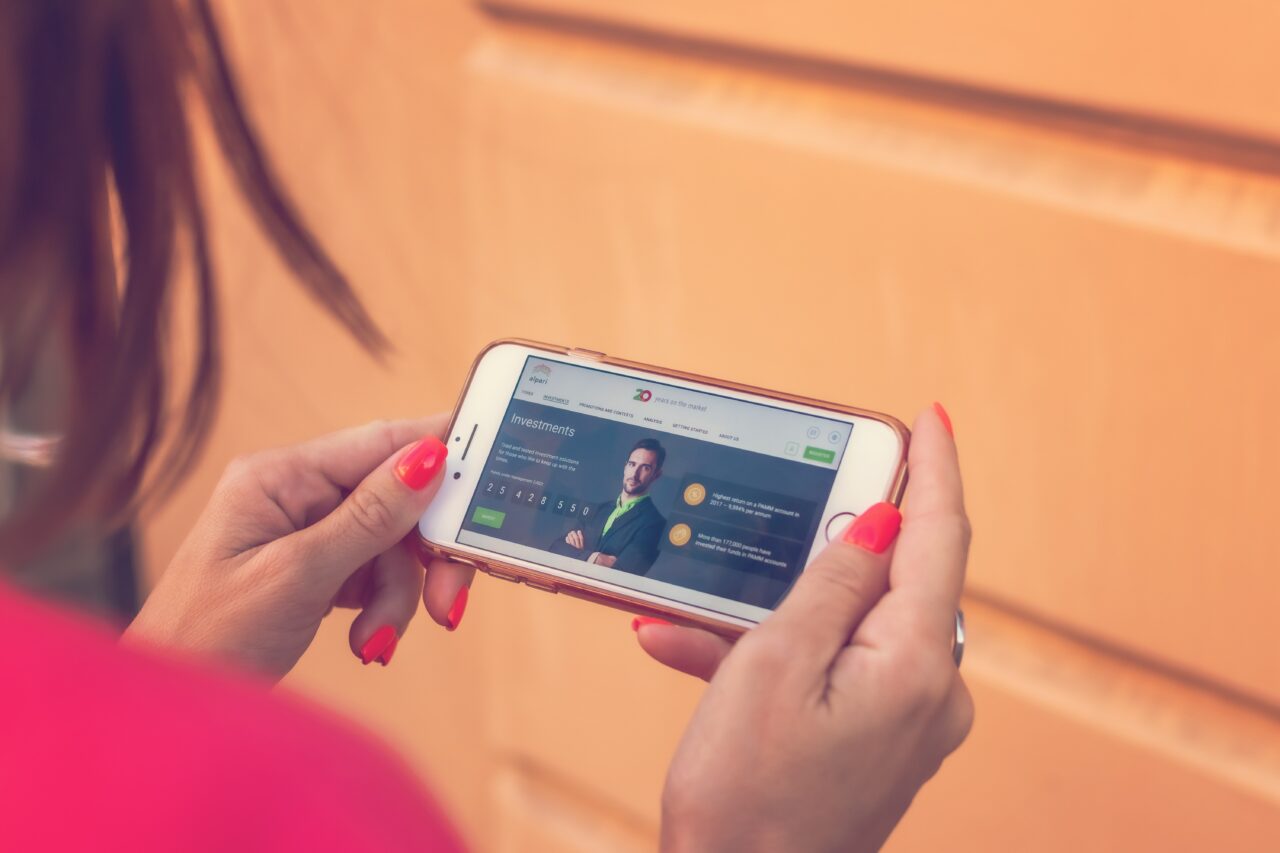
5 Customer Behaviour Trends in 2019
Businesses and more specifically retailers are experiencing complete chaos in a moment of behavioural transformation where customer expectations are changing faster than businesses can react.
In the past, consumer behaviour was dictated mostly by differences in cultural and socio-economic factors. Today the markets are influenced by a number of variables and technology is one of the biggest indicators that influences how we research, buy and interact with brands and one another. To mention a very significant event correlated with the latter variable, it was in 2007 and more specifically the launch of the iPhone, when Amazon was mostly known as an online bookshop. This little box has completely revolutionised our buying behaviour.
Today, consumers are not only categorised by generation xyz but also by the way they consume goods and services. In fact, they are referred to by many as ‘savvy’ consumers which equally translates to very demanding, intolerant, impatient and empowered. By this brief description, it’s clear that who controls the balance of the power today is the consumer, and decides what, where and when.
Here are 5 consumer trends that will have the most impact on consumer spending and on businesses:
The less is more consumer
Consumers are looking for authentic products and experiences favouring simple products that are differentiated by better quality. They are reconsidering their spending habits by replacing the mass-produced and generic product preference to those that allow them to express their status and personality. With life that is becoming more overwhelmed with things to do these days, consumers are choosing simplicity over materialism, even if this would mean getting what they want from the other side of the world. Globalisation has allowed consumers to get any product they want from anywhere in the world, at any time and at a lower cost.
Consumers are choosing simplicity in everything, even when it comes to making day-to-day decisions. We tend to think that providing more choice is better but the truth is that, in this hyper-hectic life, providing too many choices is making it more challenging for consumers. In fact, according to research from design consultancy Siegel+Gale’s 2017 Global Brand Simplicity Index, brands that provide simple and fewer choices tend to increase revenue, brand advocacy and engagement. Based on the same study of 14,000 consumers 62% of consumers will pay more for a simple experience, whether is a simpler product or service or a simpler customer journey to get that desired item.
The consumer goes mindful
The title says it all. As climate change has become the hottest topic in the past two years, consumers across the world are finding ways to make positive decisions about what to buy that can reduce the negative impact that our buying choices are having on the world. Consumers are realising that being mindful of others, animals and the environment means having the power in their hands to minimise environmental disasters. This approach has embraced mindfulness, gaining momentum in a healthier and ethical living trend that’s shaping everyday consumers choices. The advent of social media has spread veganism in consumers’ minds, not only in their diet choices but also in their pharma, beauty and personal care products. Choosing clothes that are leather- and fur-free and plastic-free products are now becoming the norm for most consumers. In fact, according to Think With Google, there has been an eight-time rise in searches for “plant-based diets” in 2016-2017 and two times increase in curiosity around “meatless” in 2017 alone.
This on-the-rise trend is forcing brands to provide the savvy-customers with the product choices they are looking for and to satisfy the causes they believe in. As the mindful consumer is getting more preoccupied about where products are coming from, the request for responsible business missions is increasing, demanding companies to offer more transparency in today’s more competitive business environment.
The champion consumer
In an era where everything is available, consumers now consider availability the base for their research and shopping. Empowered by social media and mobile devices consumers now have the power to choose for themselves dictating when, where and how they engage with brands. Rather than being seduced by brands, pre-purchase consumers seek advice from peers and strangers online on how to get the best product for their money, switching from social media to price comparison websites, meaning that one source of information is no longer enough.
Sites such as Amazon have intensified this trend to the extent in which consumers are reluctant to buy anything without consulting product reviews online. Many consumers are now more sceptical about the ability of big brands to keep their promises ending up trusting more their peers, consumer reviews and independent experts than brand marketing. This strong product review culture is disrupting the traditional funnel-shaped customer journey which is now subject to interruptions, diversions and delays. Post-purchase consumers instead are not only influencing others on what to buy but are also wanting to get involved in product development. Businesses should start co-create using crowd-sourced ideas and engaging in conversations with active followers.
The self-sufficient customer
The rise on app usage and personalisation services has allowed consumers to create ways to research and buy things that are unique for them so that they can be more self-sufficient.
This trend of cutting out the middle person is the response to the toxic mode of consumerism that we have been exposed so far. Wearable fitness and health devices combined with advanced biometric technology are also developing this new way of looking after oneself. Consumers are now actively engaged in services that improve everyday life, which is becoming a form of self-care together with engaging to a more ethical consumerism. We have been seeing this approach especially in solutions such as nutrition, alternative health therapies and fitness which offer consumers a much-needed personalised concept. The growing high-speed internet is driving these interactive solutions and facilitating the usage, allowing them to become faster and more sophisticated in their response. These companies will be able to employ resources such as 5G technology, artificial intelligence and the internet of things to help consumers save time, money and be more self-sufficient.The I want it now consumer
The Amazon effect has risen the bar when it comes to extraordinary customer service but also when it comes to delivering what consumers want and as fast as possible. Consumers are now looking for frictionless experiences that blend with their hectic lifestyle, allowing them to dedicate more time to their private life. The same immediate accessibility is also required in communication, information and availability of products and services. As technology has driven us to a society that is more productive, more frenetic and more demanding, consumers are looking to spend more on products and services that save them time and it will be technology itself or more specifically the rise in adoption of apps that will continue to drive this approach that blends with the self-sufficiency. This effect has spoiled consumers to the point that they now expect the same level of service and delivery from every brand out there, no matter the size.
-

Delivering a Data Driven Customer Experience
Today experiences are more important than products.
Customer experience will always be improved when a business can quickly respond through the right channels to manage the expectations of its customers, but customer experience with your brand is all about the customer journey and creating a reliable and consistent customer journey starts with data.
Businesses and marketers use data to reach interested potential customers and convert them into new customers. The use of data is not only limited to this, but the advancement in technology and the use of new tools also make it possible to collect huge amounts of data that can then improve your customer service and therefore customer loyalty. However, delivering superior customer experiences isn’t just about tools and machines, the biggest efforts lie on the employees behind the scenes that manage the tools and design key business processes.
In today’s hyper-competitive economy data-driven customer experience is critical to the growth of an organisation.
It enables companies to better target their customers and deliver consistency and context across the right channels. It can help to identify customers pain points and therefore areas where you need to improve your products or service preventing public complaints that can damage your brand. Data also helps to deliver a more personalised message to your customers. In today’s digitalised world, where your customers are more demanding than ever, personalisation is key and by gathering customer insights and preferences you can deliver tailored emails and ads based on their interest. Most importantly data-driven customer experience delivers just as much of a positive experience to the business itself as it does to its customers.Many organisations are employing a variety of data types to enhance their customer experience. Data gathering changes from industry to industry. For example for retailers point of sale data is the most important factor when building customer profiles. Imagine that your customers opt-in to receive marketing messages from your retailer, by using GPS-integrated tracking you are able to detect that your customer is nearby and send them a text message letting them know of a special one-day offer. This is only possible by using previously collected data of that particular customer, based on profile, loyalty card data, stated attitudes and behaviours. What is the most likely behaviour after your customer gathers interest in the offer? They head into the store and purchase using the personalised coupon code in the text message.
For technology companies call centre data is their golden dust, such as questions from the customer, their answers and their behaviour after the call. For some other industries gathering customer preferences can be more challenging. In the healthcare industry improving the customer experience is having a huge impact on the success of medical centers’ care and performance. Data can be collected on aspects like length of stay, discharge times, infection rates, number of beds available etc. Whereas on financial services companies data can be transactions, customer service calls, logins, payments etc.
Data-driven customer experience benefits are many and range from a greater ability to target specific customers, delivering consistency across various channels and of course predicting customer requirements and needs. Being technologically ready to deliver data-driven customer experiences is a great starting point but technology implementation alone won’t deliver that exceptional customer experience. It not only requires data integration but mainly requires training employees to rethink an organization’s processes, understanding the importance of being a customer-centric business and understanding how and where a data-driven customer experience is delivering. It doesn’t really happen overnight.
In order to understand, know your customers and make smart predictions about their behaviour you not only need to gather and analyse data within your organisation but also inside and outside your industry. This will help you better understand their expectations and needs which will provide you a high level of customer satisfaction, increase retention and turn them into advocates. Have you started your plan for a data-driven customer experience?
