-
AI or Bait-and-Switch? When Smart Tech Turns Against Customers
SIGN UP TO ILENIA'S NEWSLETTERS
“The issue of trust does not lie in the technology, it lies in the culture.” – Rachel Botsman
Imagine walking into a store where the price tags adjust based on how much the company thinks you can afford. That’s the digital equivalent of what this AI does. Airlines might call it yield management 2.0. But to customers, it feels like bait-and-switch – fares rising not from demand, but because an algorithm thinks you’ll tolerate it.
When did innovation start to mean tricking the very customers we’re meant to serve? As a thought leader in customer experience, I’ve been reflecting on this question while watching a troubling trend take off in the airline industry. Some airlines are using artificial intelligence not to improve service, but to play a digital-age shell game.

The Allure of AI-Powered Pricing – and Its Dark Side
At first glance, letting AI set prices sounds like efficiency. Airlines already adjust fares based on demand, timing, and traveller profiles. In fact, they’ve long used “fare fences” – rules like staying over a weekend or booking early – to charge more to travellers who are less flexible. Traditionally, these tactics had some logic and transparency to them. But with AI, the game has changed. AI can crunch vast data in real time and pinpoint the highest price each individual customer might pay. Delta Air Lines has been at the forefront of this experiment. Delta’s President, Glen Hauenstein, openly discussed using AI tools to overhaul how tickets are priced. The goal is to identify the maximum a traveler will pay for a seat without driving them away. In testing, Delta saw “amazingly favorable” revenue results from these AI-driven prices. By the end of this year, Delta plans to have AI setting fares on 20% of its domestic flights, up from just 3% earlier. Delta once described its AI as a “constantly-on super-analyst” tailoring prices to each individual traveller.

Breach of Trust at 30,000 Feet
Airlines have a hard enough time earning customer loyalty; eroding it with deceptive pricing is a self-inflicted wound. Many described Delta’s AI pricing approach as “bait and switch” and a breach of trust. I find myself agreeing. When a company lures you with one fare only to nudge it higher using an algorithm, it violates the unwritten contract of fairness.
What’s more, these schemes create negative customer experiences. Take another recent pricing ploy: several airlines quietly tested charging single travelers more per ticket than people flying in pairs. Essentially, if you booked alone, you paid a higher fare for the exact same itinerary than if you booked with a companion. Under public pressure, Delta and United Airlines actually backed off that particular solo-traveler surcharge – but not by making solo fares cheaper. Instead, they reportedly raised the multi-passenger fares to match the higher single rate. In other words, when called out, they removed the discount rather than the surcharge. If that isn’t counter-intuitive, I don’t know what is. It shows how far some airlines will go to squeeze a bit more revenue, even at the expense of goodwill.
As a customer-centricity advocate, these examples concern me deeply. Trust, once broken, is awfully hard to repair. In my LinkedIn Learning course, I talk about how companies can maintain, regain, and earn customer trust – especially when technology is involved. Every time an airline’s AI pricing scheme makes a customer feel cheated, a “trust account” is being drained. The effects might not show up immediately on a balance sheet, but they will fester in customer sentiments and future behaviors. As loyalty guru Fred Reichheld warns, profits earned at the expense of customer relationships are “bad profits” – they come from unfair or misleading practices, and they choke off long-term growth. If a dollar of revenue today creates a detractor tomorrow, is it really worth it?

AI as a Tool for Service, Not Deception
It doesn’t have to be this way. AI itself isn’t malevolent; it’s all about how we choose to use it. In my work, I often stress that technology should augment genuine value, not mask the lack of it. There is a better path for airlines and any business embracing AI. Imagine AI that helps an airline predict maintenance issues before they cause delays, or an AI that proactively reroutes stranded travellers during weather disruptions – that builds trust. When a flight is canceled, an AI-driven system could instantly rebook affected passengers and notify them, reducing stress. All of this uses artificial intelligence, but in an assistive way – to enhance the experience, not to manipulate it.
Airlines operate in a competitive environment where loyalty is fragile. Using advanced technology to outfox your own customers is a sign of outdated, product-centric thinking – the mentality that the customer is a target to exploit, rather than a partner to serve. This mindset is what needs disruption. The most visionary leaders today understand that long-term success comes from trust and loyalty. As management legend Peter Drucker famously said, “The purpose of business is to create and keep a customer.” That purpose is undermined if our shiny new AI tools cause customers to feel tricked instead of valued.

Charting an Ethical Flight Plan for AI
So, how do we move forward? The answer isn’t to shun AI, but to embed ethics and customer-centric culture into AI strategies from day one. We, as leaders, need to ask tough questions in the boardroom and data science labs alike:
1. Just because we can do this with AI, should we?
2. Will this use of AI make our customers’ lives easier?
3. Are we preserving the basic principles of honesty and fairness that our brand stands for?If any of those answers are uncomfortable, it’s time to hit pause and rethink. One practical step is to establish clear guiding principles for AI use in pricing, marketing and operations. For instance:
Commit that your company will never use personal data to secretly charge individuals different prices for the same product in ways they would deem unfair. (If there are justifiable reasons – say, giving loyal members better deals – make sure it’s transparent and opt-in.)
Also, invest in AI that improves operations and employee capabilities: route optimisation, customer support chatbots that actually resolve issues, personalised assistance.These investments pay off in customer satisfaction, which in turn pays off in repeat business.
Conclusion
Remember that trust, once lost, is expensive to regain – far more expensive than any incremental fare increase an algorithm might squeeze out today.
As Reichheld notes, bad profits “blacken a company’s reputation and make it vulnerable to competitors”.
Finally, if your company culture values customers as just numbers on a revenue report, even the best AI will be used poorly. But if you cultivate a culture of empathy, integrity, and long-term thinking, you will wield AI in service of those values. The quote I opened with resonates here: trust is a cultural issue. An organisation that truly puts customers first will naturally ask, “How can AI make our customers happier?” instead of “How can AI make our customers pay more?”As for me, I’m committed to steering us all toward a future where AI, customer experience and trust go hand in hand, because anything less is a failure of leadership and imagination.
P.S. Book me for your next keynote, masterclass, or executive advisory!
➤ Take my LinkedIn Learning courses
➤ Get a copy of my book
SIGN UP TO ILENIA'S NEWSLETTERS
-
Amazon Go: When High‑Tech Retail Forgets That Retail Is About People
SIGN UP TO ILENIA'S NEWSLETTERS
Amazon launched Go in 2018 with grand ambitions, plans for thousands of cashierless stores. The idea was simple: walk in, grab what you need, and walk out without stopping to pay. Sensors and cameras would handle the rest. Initially, we all marveled at this futuristic concept. But fast forward to today: Amazon has closed roughly half of these stores, with only about 16 left in four states. Despite dominating online retail, Amazon “is struggling to make a mark in the physical store arena”. Amazon’s brilliance in supply chain and data did not translate into an engaging in-store experience. In essence, Amazon’s high-tech convenience experiment solved a problem (checkout lines) but didn’t create a compelling reason for people to actually come to the store.

Retail Is a People Business
Why did Amazon Go stumble? The uncomfortable truth is that retail has always been as much about emotions and human behavior as about efficiency. Shoppers are not robots executing transactions; we’re human beings driven by curiosity, habit, and feelings. Think about why people love browsing a store like TK Maxx or Lidl. It’s the thrill of discovery, that giddy feeling when you find an unexpected treasure on the shelf. Aldi, a discount grocer, famously has a random middle aisle full of rotating surprise items (so beloved that fans jokingly dub it the “aisle of shame”). That rotating “treasure hunt” gives people a reason to visit beyond just low prices. In an age where any product can be ordered online, retail stores survive by offering something experiential. The retails that will survive will become destinations and entertainment centers. In other words, a store must spark some joy or curiosity that a website can’t. Amazon Go, however, stripped the shopping trip down to pure utilitarian efficiency. Every Amazon Go I visited felt like a sterile vending machine: you get the product and leave, no surprises, no sensory delights, no human interaction. It was convenience at the cost of experience. And in retail, experience is often the real product.

What Amazon Missed: Empathy, Emotions, and Expectations
Walking into an Amazon Go store, I scanned my phone at the entrance gate. The technology was impressive, overhead cameras tracking my every move, virtual carts tallying my items. Yet as I wandered the aisles, I felt oddly disengaged. There were few staff around, and those present were mainly restocking or standing by. No one to smile or ask if I needed help. The store offered efficiency, but little warmth. It turns out many customers felt the same emotional gap. Shoppers had to download an app and link their payment just to enter, which some found more hassle than a simple cash purchase. Many were also wary of being constantly monitored by cameras, a feeling that their every step was tracked. Amazon’s reputation for data collection didn’t help ease those privacy anxieties. In trying to remove friction, Amazon created a different kind of discomfort.
Perhaps most striking is what behavioral experts observed about Amazon Go: by making the purchase process completely hands-off, it disrupted the psychology of shopping. We’re used to a sense of closure when we decide to buy something, handing over cash, swiping a card, and hearing a receipt print. Amazon Go erased that moment entirely. In other words, the store made some shoppers feel a loss of control or agency in their own purchase. That’s a fascinating insight: by fixing an annoyance (waiting), Amazon unintentionally removed an action that gave customers emotional confirmation of their choice. What Amazon saw as just excess friction, some customers subconsciously saw as part of the experience.

The expectations for Amazon Go were sky-high. Customers like me expected a futuristic delight, a convenience store reimagined for the modern age. But once the initial novelty of “just walk out” wore off, there wasn’t much to love. The food and product selection was ordinary. The prices weren’t particularly lower. And the ultra-minimalist design, while sleek, felt cold. Amazon seems to have assumed that eliminating checkout was enough to keep people coming back. But customers expected more than a transaction; they wanted some sense of connection, surprise, or at least an easier life than they already had. Without those emotional perks, many shoppers tried Amazon Go once out of curiosity and then drifted back to their usual corner store or café where the barista knows their name.
Embracing a New Perspective: Technology and Empathy
It’s ironic that Amazon, whose official leadership principle is “customer obsession,” faltered here by obsessing over the wrong aspect of the customer experience. Convenience is great, but only up to a point. How an experience makes customers feel has a bigger influence on their loyalty than even convenience.
Where does this leave us? As business leaders, we should certainly celebrate technology’s ability to simplify life. But we must also ask: What deeper need or feeling are we fulfilling for our customers? Amazon’s experiment shows that you can have the smartest technology in the world and still stumble if you neglect human psychology and emotion. The solution is not to reject innovation, but to balance it with empathy. Ultimately, innovation must serve humans, not the other way around. The downfall of Amazon Go speaks to any industry disrupted by tech. It’s a caution not to get so enamoured with data and automation that we forget the messy, irrational, wonderful nature of people.

As I write this, I challenge myself and all leaders:
1. How can we marry our amazing new technologies with the age-old truths of human nature?
2. Is removing every tiny friction always the best path? Or could a little friction actually enrich the experience?
3. Are we trying to create the fastest experience, or the most fulfilling experience?
Sometimes, the best innovation is not a higher gear but a more human touch.
Conclusion
In closing, Amazon Go’s fate is not just Amazon’s issue. It’s a wake-up call to all of us pushing the boundaries of customer experience. Yes, our world is changing fast with AI, apps, and automation. But human nature isn’t changing. People still crave connection, surprise, and a sense of being valued. We must design with that in mind.
So next time you build your business innovations, dare to ask: How can I make my customer feel a little more human, a little more happy, in the process?P.S. Book me for your next keynote, masterclass, or executive advisory!
➤ Take my LinkedIn Learning courses
➤ Get a copy of my book
SIGN UP TO ILENIA'S NEWSLETTERS
-
Digital Product Passports: A Revolution in Transparent Fashion
I often hear people say they want to be ethical consumers, to buy products that reflect their values but it’s remarkably hard to do this consistently. I feel this frustration especially in the fashion industry. Try shopping for a sweater and figuring out if it was made with fair labour and sustainable materials, that information is nowhere to be found on a typical clothing tag.
It’s a classic case of an information gap: consumers can be overloaded with confusing claims or left with nothing concrete at all, unsure which choice is truly ethical. In fact, research shows a well-documented “attitude–behaviour gap” – plenty of shoppers say they care, but don’t act accordingly because getting the right information at the right time is too difficult. We are essentially asked to make purchasing decisions on faith. This hidden information problem echoes the classic “market for lemons” scenario in economics: when buyers can’t tell high-quality, ethical products from bad actors, the good players don’t get fully rewarded.
Enter Digital Product Passports
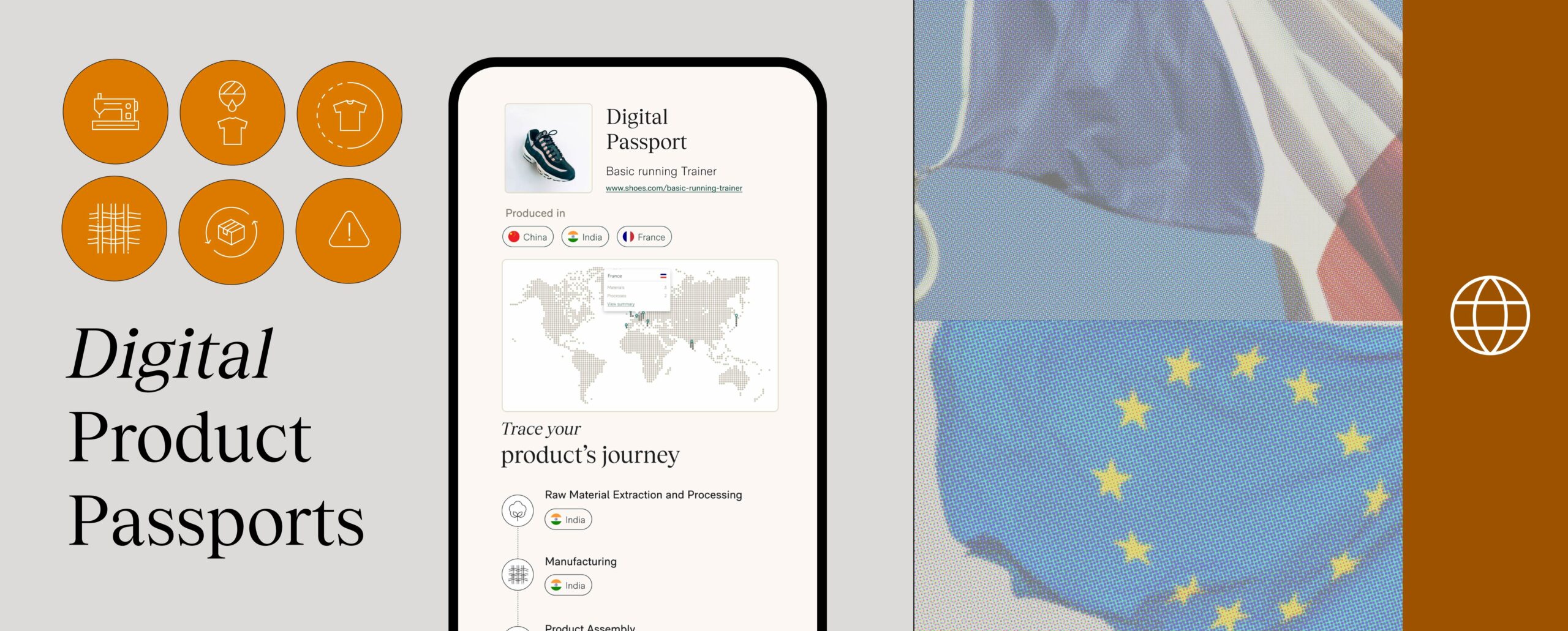
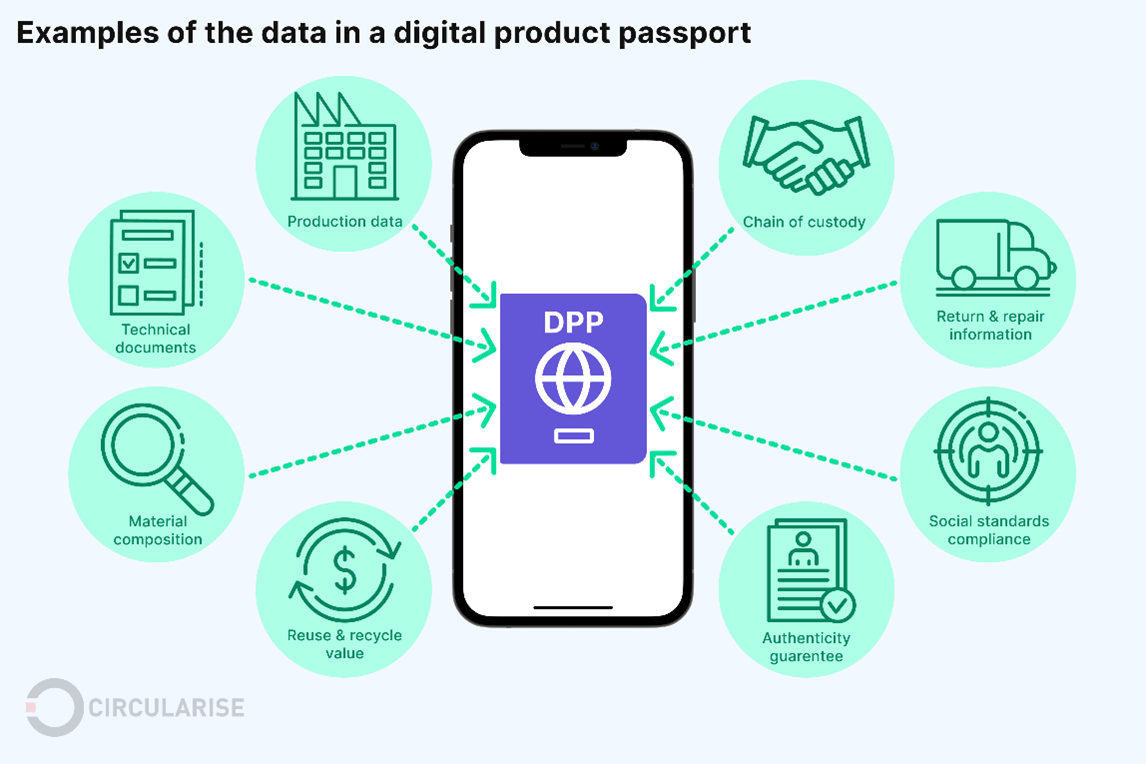
This is where Digital Product Passports (DPPs) come in, essentially a digital “ID card” for a product that tracks its entire life story. Instead of a conventional clothing label that only lists fabric and country of origin, a DPP is a rich record we can access via something like a QR code on the tag. Scan it with our phone, and we could see where the cotton was farmed, which factory stitched the seams, how much water and energy were used, and even instructions on recycling or repair.
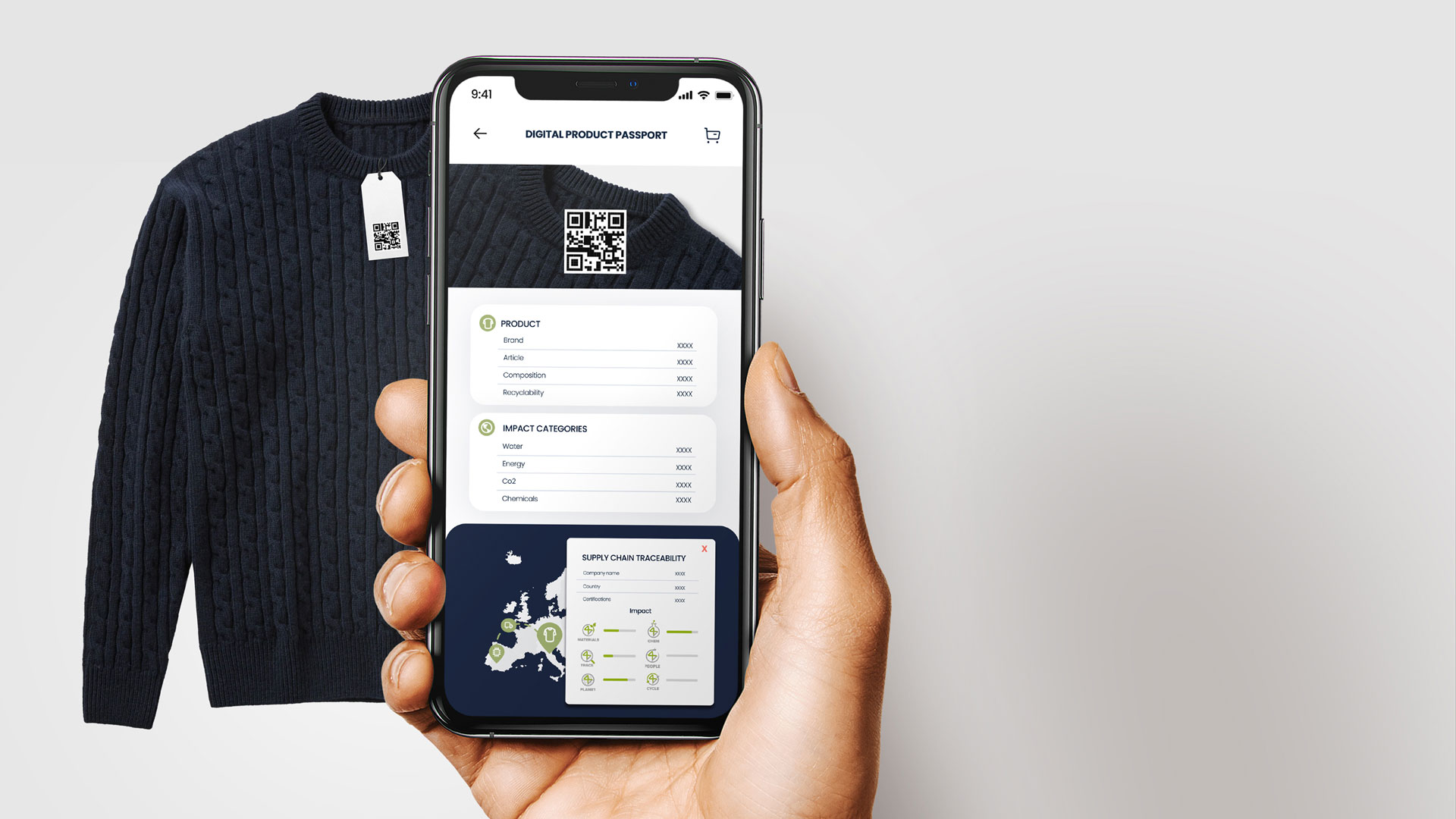
The European Union finds this idea so crucial that it’s making DPPs mandatory for all fashion and textile products sold in Europe by 2030. The goal is to make information about a garment’s supply chain and sustainability as easy to access as a nutrition label on food, something we can actually use to make informed choices.
Even before regulations kick in, some brands are racing ahead. London-based fashion brand Nobody’s Child has been an early adopter, deciding to roll out digital passports across all their products by autumn 2025. They’re tracking about 110 data points per garment, covering everything from fibre origin to the energy source powering the factory. Think about that, 110 bits of information for a single dress or pair of jeans! Their CEO described gathering this data as “like air traffic control at times”, requiring a massive mindset shift for suppliers who have never had to share so much detail before.
Flipping the Power Dynamic
What’s truly revolutionary about digital passports is how they flip the traditional flow of data in the fashion industry. Up until now, brands collected data about us to drive their sales, while we knew little about their products. Most of us have accepted that reality. I know I have, handing over my email, preferences, and purchase history to countless retailers, with no real expectation of getting that data back. DPPs turn that equation around. Suddenly we’re the ones armed with rich information, while brands must open up and share.
I imagine this power shift spawning whole new platforms and services. We might soon see crowdsourced sustainability reviews. Think of a “Yelp for ethical fashion”, where each product’s passport data feeds into public ratings of a brand’s social and environmental performance. Rather than combing through each item’s details myself, we could check a community-generated score that distills how transparent and responsible a company really is.
AI and Future Innovations
Looking further ahead, digital product passports could unlock innovations we’re only beginning to fathom. With access to a vast database of product journeys, AI systems could learn to spot patterns and red flags faster than any human. An AI could analyse thousands of DPP entries and detect anomalies that hint at labour abuses or environmental risk, say, a sudden drop in reported factory workforce or an unusual spike in water usage at a particular mill.
Imagine pairing product data with personal data. In a decade, our clothing might be tailored not just to our size, but to our biochemistry. Say, I’ve taken a DNA or skin microbiome test, those insights combined with passport data on textile properties could guide companies to craft fabrics optimised for me. Digital passports start as a transparency tool, yet they might evolve into something even more personal.
The Two-Way Data Street
One of the most intriguing developments is turning information flow into a two-way street. Imagine you buy a high-quality coat with a digital passport. Six months later, you notice wear and get it serviced. In the future, you might scan the coat’s code and log a repair request and that repair event could be added to the coat’s digital record.
This post-purchase data closes the loop in the product’s life cycle. Brands would learn that Product X typically needs new zippers after two years, or that dresses from Supplier Y’s fabric last longer than those from Supplier Z. Armed with this knowledge, brands can improve design and durability in the next generation.
From a business perspective, this paves the way for new revenue models. Think about how owning a car comes with maintenance services, warranties, trade-in values. We could see something similar in fashion. My winter boots could ping me when it’s time for resoling, just as my car signals when it needs an oil change. This could evolve into subscription programs, perhaps an annual fee that covers all repairs, cleaning, and even upgrades for my wardrobe.
Beyond Fashion: A Cultural Shift
This transparency revolution isn’t limited to big luxury labels or niche eco-brands. The EU’s forthcoming rules will apply to every garment sold in the market, from budget t-shirts to designer handbags. And once consumers get used to having this information, they’ll expect it in other industries too – electronics, furniture, even food. We’re looking at a broader rebalancing of power between customers and companies, where openness and accountability become the norm.
What excites me most is that DPPs encourage a mindset that embraces continuous improvement. When everything is out in the open, complacency is not an option. Companies will have to ask themselves tough questions and take concrete steps to fix any issues – whether environmental impact, labor conditions, or quality control.
Conclusion
Digital product passports offer a glimpse into a future where transparency isn’t a buzzword but a baseline expectation. As a consumer, I’m eager for that future because it means a simpler way to shop according to my conscience. As a business observer, I’m convinced that companies who welcome this transparency will find themselves rewarded with deeper customer loyalty, new market opportunities, and a stronger brand. This is more than a tech upgrade. It’s a transformation in how we buy, sell, and relate to the things we wear.
P.S. Book me for your next keynote, masterclass, or executive advisory!
➤ Take my LinkedIn Learning courses
➤ Get a copy of my book
-

How is a new electric automotive brand keeping ahead of the curve? A successful customer experience example by Polestar
This article was originally published on CEOWORLD magazine.
While tech giants such as Airbnb, Amazon, and Uber keep raising the bar on successfully delivering their customer experience, the automotive industry has been lagging behind due to its resistance to adapt to the digital consumer. The automotive sector of the future can be very different from that of the past and of today. Those car brands that are eager to remain relevant to the digital consumer are going to be able to make the next age of mobility.
As a Millennial, in 36 years of my life, I think I entered a car dealership only once. How are car brands interacting with consumers like me who expect nothing less than a reliable and hassle-free service, personalised omni-channel communication, a fully digital experience and real-time social-media interactions? As I am currently writing my book on customer-centricity, I am interested to know how Polestar, a Swedish new electric car brand owned by Volvo, is doing in this regard. Tim Heldmann, Chief Marketing Officer, shared how Polestar is putting their customers at the centre of their business strategy and enhancing customer experience through connectivity.
To know more customer-centric case studies register for the release of my book “Journey to Centricity“
