
-

The 6 Most Asked Questions from My European Speaking Tour
SIGN UP TO ILENIA'S NEWSLETTERS
In my recent mini speaking tour around Europe, speaking to companies about customer centricity, I received a wave of sharp questions. Many of them came up repeatedly about everything from empowering employees to dealing with difficult customers, from consistency to empathy, and leadership.
In this newsletter, I’m sharing the six most frequently asked questions. Over the next few weeks, I’ll be digging deeper into each one to help you apply these lessons inside your organisation.
Ready? Let’s go.
1. Finding the “yes” – how can we make it practical for teams to say yes to customers?
I talked about something I see all the time. A customer reaches out in a difficult or emotionally charged moment, and the response they get is, “I’m afraid we can’t do that.” It’s not that the employee doesn’t care. It’s that they’ve been trained to follow a process, not to help a person.
“Finding the yes” means shifting that mindset. It means teaching our teams how to respond with judgement, empathy, and a focus on what the customer actually needs—especially when the situation doesn’t fit neatly into a policy. It’s about allowing flexibility within reason, not removing structure altogether.
The most customer-focused organisations train their people to contextualise situations. They give their frontline staff the authority to act when the standard process fails the customer. They also provide support from leadership, so employees feel safe using discretion.
Start by setting guardrails. Make it clear where flexibility is possible and what your non-negotiables are. Then encourage your teams to use their judgement within those boundaries. Provide real examples of when it’s appropriate to say yes. That could be waiving a charge for someone in distress, extending a service window for a vulnerable customer, or sending a replacement item without a receipt because you trust the story.
Most importantly, back your people when they take a thoughtful risk. If you punish initiative, you train people to play it safe. If you reward good judgement, you build a culture where both customers and employees feel valued.

2. Are there “bad” customers, and how do we deal with them?
I don’t like calling anyone a “bad” customer, but not all are worth keeping. Some repeatedly abuse staff, exploit policies, or drain time without adding value.
This question came up in a B2B context, but it matters in B2C too. In my experience, these customers are a small group, around 5%, but they take up far more than 5% of your energy.
Here’s how to handle them while staying customer-centric:
– Define clearly what unacceptable looks like. In B2B, it might be scope creep without discussion, chronic late payments, or a toxic tone. In B2C, it could be harassment, manipulation, or serial refund abuse.
– Be transparent with your teams. They need to know they’re not expected to accept mistreatment in the name of service.
– Train staff in calm, professional ways to hold boundaries. Customer centricity doesn’t mean allowing chaos.
– Protect your people. If your team sees that you support them in hard moments, they’ll show up better for everyone else.The vast majority of customers just want a good experience. Spend your energy there, and don’t let the loud 5% set the tone for the rest.
3. Why is inconsistency such a big problem in customer centricity, and how do we fix it?
I mentioned that a lack of consistency is the most common customer-centricity problem. Even companies with the right intentions often fail to deliver a reliable experience across all touchpoints. They might delight a customer in one interaction and then disappoint them in the next—which erodes trust.
Most companies struggle with consistency because their teams often operate in silos. Channels are disconnected, which leads to fragmented customer experiences. In many cases, leadership does not enforce a uniform set of customer-first standards across the organisation, which results in uneven service and confusion for customers.
Here’s how to build that consistency:
– Align every team around shared customer principles, not just departmental targets.
– Create a clear customer promise—and reflect it in every channel and interaction.
– Build feedback loops so teams learn from what customers actually experience, not what they assume happens.
– Train employees consistently across roles and locations, so the experience doesn’t depend on who picks up the phone.
– Make consistency a performance measure, track it, report it, and reward it.It’s not the occasional wow moment that wins loyalty. It’s being reliably good, every time.

4. How do we operationalise empathy while staying profitable?
This question came up again and again, and not from HR or CX teams, but from CEOs. That surprised me. It’s encouraging, but also revealing: leaders are starting to realise that empathy isn’t a soft skill, it’s a competitive one. But many still don’t know how to turn it into a working system. The good news is empathy and profitability can go hand in hand, so you don’t have to sacrifice profit for empathy, they reinforce each other.
Here are some concrete ways to do that:
1. Train for empathy: Incorporate customer empathy into training programs. For example, teach active listening skills, doing role-play scenarios where employees practice putting themselves in the customer’s shoes.
2. Create empathy infrastructure: Encourage leaders and teams to regularly share and learn from customer stories. Some companies have an “empty chair” in meetings representing the customer, to consider their perspective in every decision. Others, like Amazon, famously start product proposals with a hypothetical customer press release to ensure any idea begins with the customer’s viewpoint.
3. Balance empathy with business sense: Being empathetic means finding solutions that address the customer’s feelings and needs in a sustainable way. For instance, if a delivery is late and the customer is angry, you’d acknowledge their emotion and solve the problem, without bankrupting the company. Train your team on where that sweet spot is – meeting real needs generously, but also knowing the limits (harkening back to setting boundaries from question 2).Empathy in business isn’t about being nice, also that, but it’s about recognising the human being behind the customer, walking in their shoes, and solving their problem in a way that’s both compassionate and efficient. Empathy without action means nothing. Customers don’t just want to be understood—they want things to be made right.

5. Where to start to become a more customer-centric organisation?
Many leaders asked, essentially, “This all sounds good – but where do we start to become more customer-centric?” My advice is to start with the foundational building blocks and go step by step:
1. Customer centricity begins with leadership. It’s not enough to talk about it—leaders need to show it. That means spending time with customers, listening directly, and modelling the behaviour they want the rest of the organisation to adopt.
2. You can’t serve who you don’t understand. Use data, interviews, and feedback to learn who your customers are, what matters to them, and where they struggle.
3. Your teams need the tools, training, and authority to act in the customer’s best interest without jumping through hoops. When people feel trusted, they act with more care and confidence.
4. If you want people to prioritise the customer, reward them for it. Recognise and celebrate customer-focused behaviour, and include customer outcomes in how you measure performance.
5. Choose one customer journey, fix it, and then move to the next. Think of it as a loop: listen, improve, measure, and repeat.You don’t need to transform everything overnight. What matters is starting with intent and making the customer part of every decision, every day.
6. What leaders can do to be more customer-focused
This was my favourite question. It came up during an intimate keynote with the company’s most senior leaders and I was genuinely glad it did. It showed that leadership is ready to take personal responsibility for customer focus.
The truth is, it always starts at the top. What leaders say and do shapes the culture. Here are a few practical ways to reinforce customer focus from the top:
Leaders should engage directly with customers. This means reading customer emails, listening to support calls, or spending time alongside frontline teams. These actions show the organisation that customer insight matters and that leadership isn’t removed from reality.
Removing internal barriers is essential. Leaders must ensure teams have the tools, systems, and authority they need to act in the customer’s best interest, without unnecessary approval chains or delays.
Accountability must also be built in. Customer outcomes should be part of how performance is reviewed and rewarded. This isn’t just about metrics, it’s about learning from both good and bad customer experiences and sharing those lessons across teams.
Finally, leaders should consistently celebrate the right behaviour. When employees show good judgement or go the extra mile for a customer, those moments should be recognised publicly. It reinforces the culture, boosts morale, and teaches others what “good” really looks like.Conclusion:
These questions from my keynote sessions show that many leaders are on that journey, striving to find the right balance of customer experience and business results. The fact is, those two goals go hand in hand. I hope these answers provide value and some actionable ideas for you and your organisation. Keep the great questions coming, and more importantly, keep championing your customers. After all, as I often say, the customer’s experience is your company’s reality.
What’s the one question you’d like me to explore in more depth?
P.S. Book me for your next keynote, masterclass, or executive advisory!
➤ Take my LinkedIn Learning courses
➤ Get a copy of my book
SIGN UP TO ILENIA'S NEWSLETTERS
-
AI or Bait-and-Switch? When Smart Tech Turns Against Customers
SIGN UP TO ILENIA'S NEWSLETTERS
“The issue of trust does not lie in the technology, it lies in the culture.” – Rachel Botsman
Imagine walking into a store where the price tags adjust based on how much the company thinks you can afford. That’s the digital equivalent of what this AI does. Airlines might call it yield management 2.0. But to customers, it feels like bait-and-switch – fares rising not from demand, but because an algorithm thinks you’ll tolerate it.
When did innovation start to mean tricking the very customers we’re meant to serve? As a thought leader in customer experience, I’ve been reflecting on this question while watching a troubling trend take off in the airline industry. Some airlines are using artificial intelligence not to improve service, but to play a digital-age shell game.

The Allure of AI-Powered Pricing – and Its Dark Side
At first glance, letting AI set prices sounds like efficiency. Airlines already adjust fares based on demand, timing, and traveller profiles. In fact, they’ve long used “fare fences” – rules like staying over a weekend or booking early – to charge more to travellers who are less flexible. Traditionally, these tactics had some logic and transparency to them. But with AI, the game has changed. AI can crunch vast data in real time and pinpoint the highest price each individual customer might pay. Delta Air Lines has been at the forefront of this experiment. Delta’s President, Glen Hauenstein, openly discussed using AI tools to overhaul how tickets are priced. The goal is to identify the maximum a traveler will pay for a seat without driving them away. In testing, Delta saw “amazingly favorable” revenue results from these AI-driven prices. By the end of this year, Delta plans to have AI setting fares on 20% of its domestic flights, up from just 3% earlier. Delta once described its AI as a “constantly-on super-analyst” tailoring prices to each individual traveller.

Breach of Trust at 30,000 Feet
Airlines have a hard enough time earning customer loyalty; eroding it with deceptive pricing is a self-inflicted wound. Many described Delta’s AI pricing approach as “bait and switch” and a breach of trust. I find myself agreeing. When a company lures you with one fare only to nudge it higher using an algorithm, it violates the unwritten contract of fairness.
What’s more, these schemes create negative customer experiences. Take another recent pricing ploy: several airlines quietly tested charging single travelers more per ticket than people flying in pairs. Essentially, if you booked alone, you paid a higher fare for the exact same itinerary than if you booked with a companion. Under public pressure, Delta and United Airlines actually backed off that particular solo-traveler surcharge – but not by making solo fares cheaper. Instead, they reportedly raised the multi-passenger fares to match the higher single rate. In other words, when called out, they removed the discount rather than the surcharge. If that isn’t counter-intuitive, I don’t know what is. It shows how far some airlines will go to squeeze a bit more revenue, even at the expense of goodwill.
As a customer-centricity advocate, these examples concern me deeply. Trust, once broken, is awfully hard to repair. In my LinkedIn Learning course, I talk about how companies can maintain, regain, and earn customer trust – especially when technology is involved. Every time an airline’s AI pricing scheme makes a customer feel cheated, a “trust account” is being drained. The effects might not show up immediately on a balance sheet, but they will fester in customer sentiments and future behaviors. As loyalty guru Fred Reichheld warns, profits earned at the expense of customer relationships are “bad profits” – they come from unfair or misleading practices, and they choke off long-term growth. If a dollar of revenue today creates a detractor tomorrow, is it really worth it?

AI as a Tool for Service, Not Deception
It doesn’t have to be this way. AI itself isn’t malevolent; it’s all about how we choose to use it. In my work, I often stress that technology should augment genuine value, not mask the lack of it. There is a better path for airlines and any business embracing AI. Imagine AI that helps an airline predict maintenance issues before they cause delays, or an AI that proactively reroutes stranded travellers during weather disruptions – that builds trust. When a flight is canceled, an AI-driven system could instantly rebook affected passengers and notify them, reducing stress. All of this uses artificial intelligence, but in an assistive way – to enhance the experience, not to manipulate it.
Airlines operate in a competitive environment where loyalty is fragile. Using advanced technology to outfox your own customers is a sign of outdated, product-centric thinking – the mentality that the customer is a target to exploit, rather than a partner to serve. This mindset is what needs disruption. The most visionary leaders today understand that long-term success comes from trust and loyalty. As management legend Peter Drucker famously said, “The purpose of business is to create and keep a customer.” That purpose is undermined if our shiny new AI tools cause customers to feel tricked instead of valued.

Charting an Ethical Flight Plan for AI
So, how do we move forward? The answer isn’t to shun AI, but to embed ethics and customer-centric culture into AI strategies from day one. We, as leaders, need to ask tough questions in the boardroom and data science labs alike:
1. Just because we can do this with AI, should we?
2. Will this use of AI make our customers’ lives easier?
3. Are we preserving the basic principles of honesty and fairness that our brand stands for?If any of those answers are uncomfortable, it’s time to hit pause and rethink. One practical step is to establish clear guiding principles for AI use in pricing, marketing and operations. For instance:
Commit that your company will never use personal data to secretly charge individuals different prices for the same product in ways they would deem unfair. (If there are justifiable reasons – say, giving loyal members better deals – make sure it’s transparent and opt-in.)
Also, invest in AI that improves operations and employee capabilities: route optimisation, customer support chatbots that actually resolve issues, personalised assistance.These investments pay off in customer satisfaction, which in turn pays off in repeat business.
Conclusion
Remember that trust, once lost, is expensive to regain – far more expensive than any incremental fare increase an algorithm might squeeze out today.
As Reichheld notes, bad profits “blacken a company’s reputation and make it vulnerable to competitors”.
Finally, if your company culture values customers as just numbers on a revenue report, even the best AI will be used poorly. But if you cultivate a culture of empathy, integrity, and long-term thinking, you will wield AI in service of those values. The quote I opened with resonates here: trust is a cultural issue. An organisation that truly puts customers first will naturally ask, “How can AI make our customers happier?” instead of “How can AI make our customers pay more?”As for me, I’m committed to steering us all toward a future where AI, customer experience and trust go hand in hand, because anything less is a failure of leadership and imagination.
P.S. Book me for your next keynote, masterclass, or executive advisory!
➤ Take my LinkedIn Learning courses
➤ Get a copy of my book
SIGN UP TO ILENIA'S NEWSLETTERS
-
Digital Product Passports: A Revolution in Transparent Fashion
I often hear people say they want to be ethical consumers, to buy products that reflect their values but it’s remarkably hard to do this consistently. I feel this frustration especially in the fashion industry. Try shopping for a sweater and figuring out if it was made with fair labour and sustainable materials, that information is nowhere to be found on a typical clothing tag.
It’s a classic case of an information gap: consumers can be overloaded with confusing claims or left with nothing concrete at all, unsure which choice is truly ethical. In fact, research shows a well-documented “attitude–behaviour gap” – plenty of shoppers say they care, but don’t act accordingly because getting the right information at the right time is too difficult. We are essentially asked to make purchasing decisions on faith. This hidden information problem echoes the classic “market for lemons” scenario in economics: when buyers can’t tell high-quality, ethical products from bad actors, the good players don’t get fully rewarded.
Enter Digital Product Passports
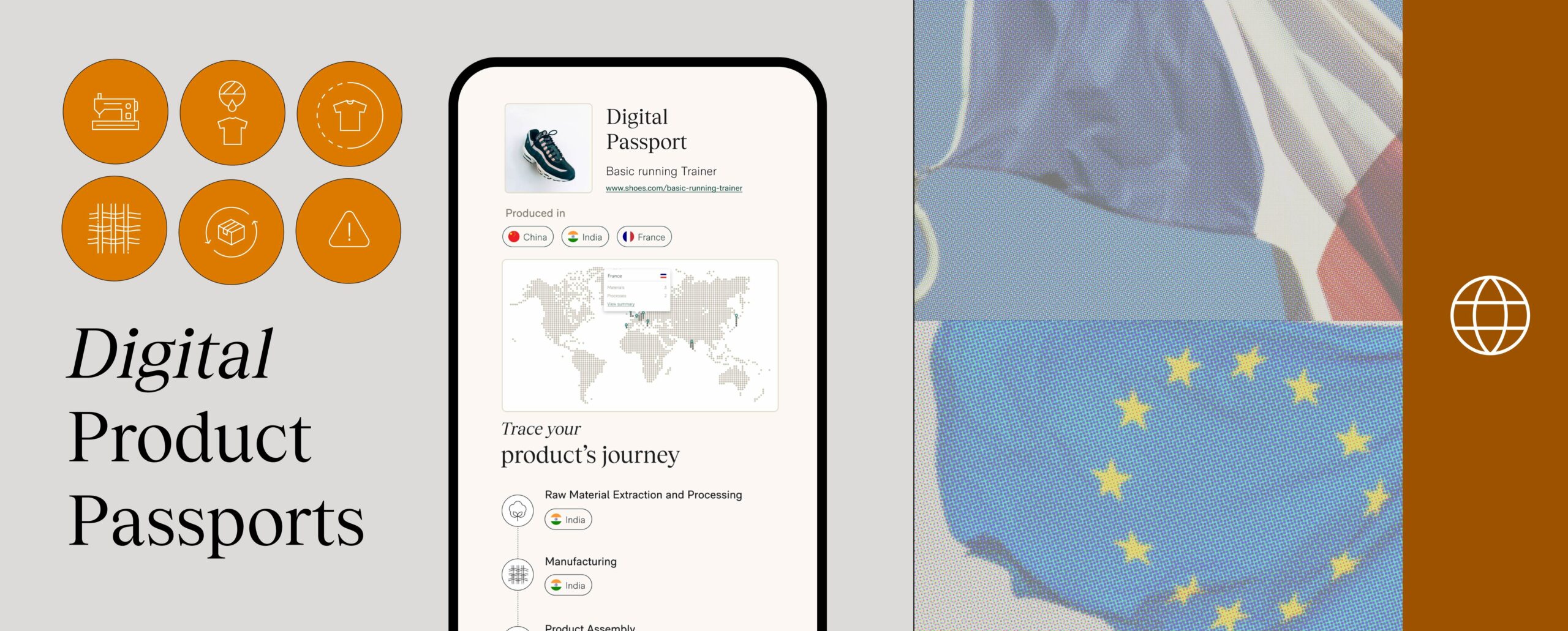
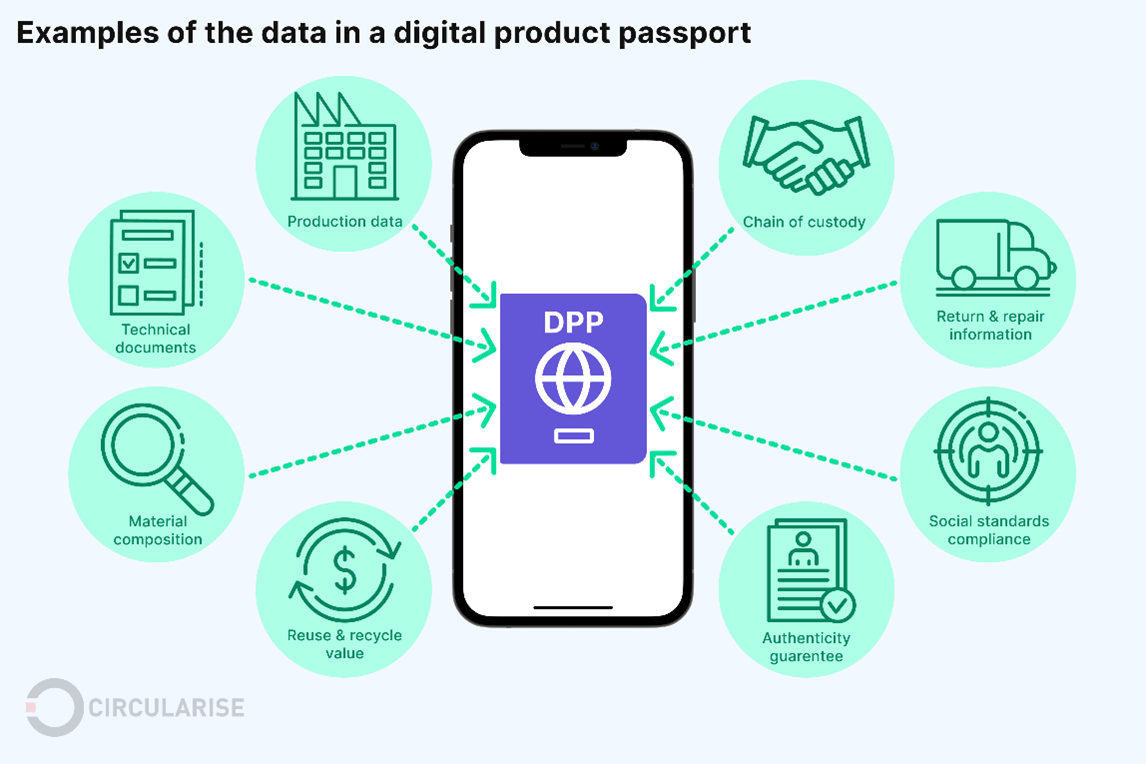
This is where Digital Product Passports (DPPs) come in, essentially a digital “ID card” for a product that tracks its entire life story. Instead of a conventional clothing label that only lists fabric and country of origin, a DPP is a rich record we can access via something like a QR code on the tag. Scan it with our phone, and we could see where the cotton was farmed, which factory stitched the seams, how much water and energy were used, and even instructions on recycling or repair.
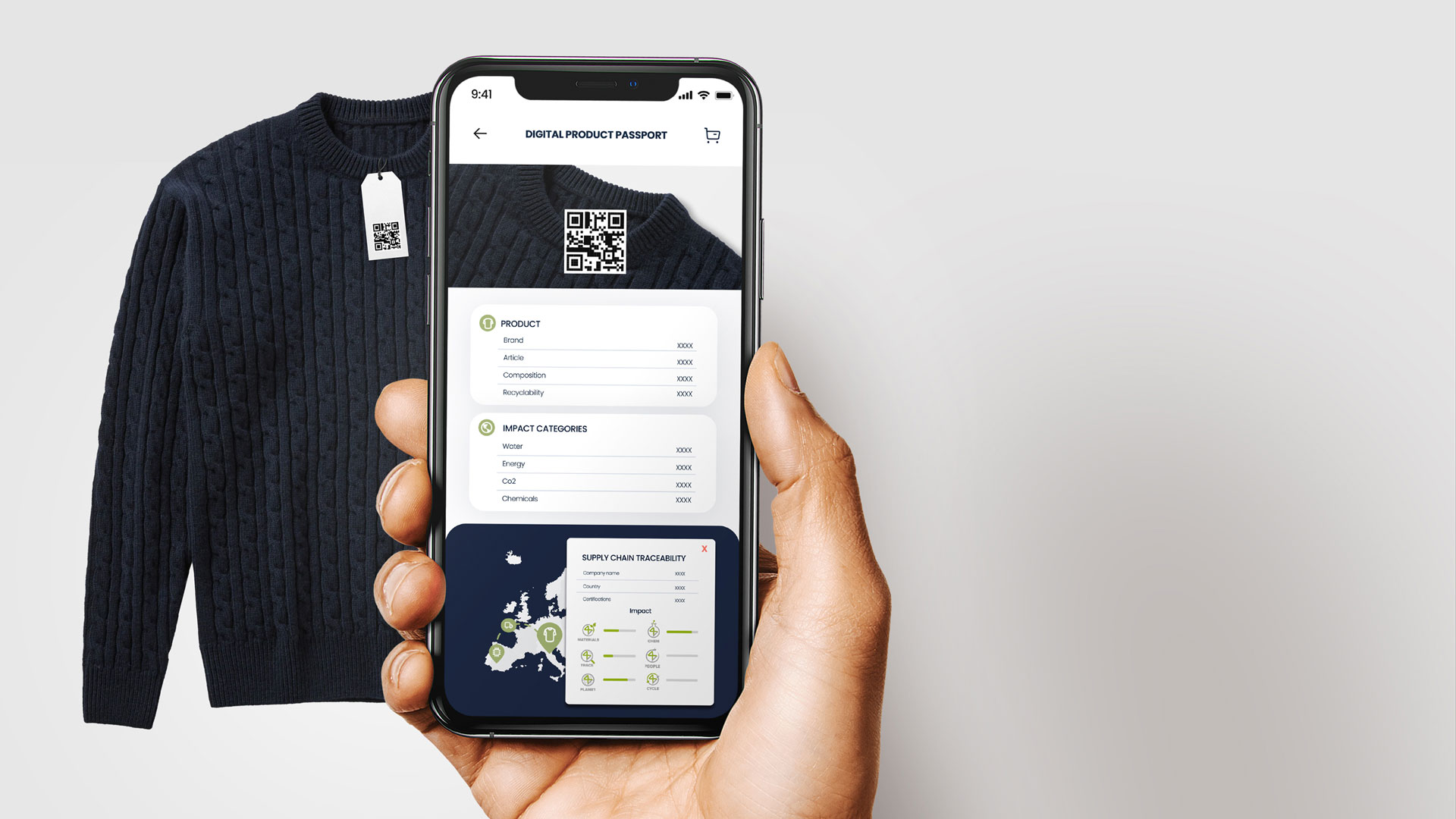
The European Union finds this idea so crucial that it’s making DPPs mandatory for all fashion and textile products sold in Europe by 2030. The goal is to make information about a garment’s supply chain and sustainability as easy to access as a nutrition label on food, something we can actually use to make informed choices.
Even before regulations kick in, some brands are racing ahead. London-based fashion brand Nobody’s Child has been an early adopter, deciding to roll out digital passports across all their products by autumn 2025. They’re tracking about 110 data points per garment, covering everything from fibre origin to the energy source powering the factory. Think about that, 110 bits of information for a single dress or pair of jeans! Their CEO described gathering this data as “like air traffic control at times”, requiring a massive mindset shift for suppliers who have never had to share so much detail before.
Flipping the Power Dynamic
What’s truly revolutionary about digital passports is how they flip the traditional flow of data in the fashion industry. Up until now, brands collected data about us to drive their sales, while we knew little about their products. Most of us have accepted that reality. I know I have, handing over my email, preferences, and purchase history to countless retailers, with no real expectation of getting that data back. DPPs turn that equation around. Suddenly we’re the ones armed with rich information, while brands must open up and share.
I imagine this power shift spawning whole new platforms and services. We might soon see crowdsourced sustainability reviews. Think of a “Yelp for ethical fashion”, where each product’s passport data feeds into public ratings of a brand’s social and environmental performance. Rather than combing through each item’s details myself, we could check a community-generated score that distills how transparent and responsible a company really is.
AI and Future Innovations
Looking further ahead, digital product passports could unlock innovations we’re only beginning to fathom. With access to a vast database of product journeys, AI systems could learn to spot patterns and red flags faster than any human. An AI could analyse thousands of DPP entries and detect anomalies that hint at labour abuses or environmental risk, say, a sudden drop in reported factory workforce or an unusual spike in water usage at a particular mill.
Imagine pairing product data with personal data. In a decade, our clothing might be tailored not just to our size, but to our biochemistry. Say, I’ve taken a DNA or skin microbiome test, those insights combined with passport data on textile properties could guide companies to craft fabrics optimised for me. Digital passports start as a transparency tool, yet they might evolve into something even more personal.
The Two-Way Data Street
One of the most intriguing developments is turning information flow into a two-way street. Imagine you buy a high-quality coat with a digital passport. Six months later, you notice wear and get it serviced. In the future, you might scan the coat’s code and log a repair request and that repair event could be added to the coat’s digital record.
This post-purchase data closes the loop in the product’s life cycle. Brands would learn that Product X typically needs new zippers after two years, or that dresses from Supplier Y’s fabric last longer than those from Supplier Z. Armed with this knowledge, brands can improve design and durability in the next generation.
From a business perspective, this paves the way for new revenue models. Think about how owning a car comes with maintenance services, warranties, trade-in values. We could see something similar in fashion. My winter boots could ping me when it’s time for resoling, just as my car signals when it needs an oil change. This could evolve into subscription programs, perhaps an annual fee that covers all repairs, cleaning, and even upgrades for my wardrobe.
Beyond Fashion: A Cultural Shift
This transparency revolution isn’t limited to big luxury labels or niche eco-brands. The EU’s forthcoming rules will apply to every garment sold in the market, from budget t-shirts to designer handbags. And once consumers get used to having this information, they’ll expect it in other industries too – electronics, furniture, even food. We’re looking at a broader rebalancing of power between customers and companies, where openness and accountability become the norm.
What excites me most is that DPPs encourage a mindset that embraces continuous improvement. When everything is out in the open, complacency is not an option. Companies will have to ask themselves tough questions and take concrete steps to fix any issues – whether environmental impact, labor conditions, or quality control.
Conclusion
Digital product passports offer a glimpse into a future where transparency isn’t a buzzword but a baseline expectation. As a consumer, I’m eager for that future because it means a simpler way to shop according to my conscience. As a business observer, I’m convinced that companies who welcome this transparency will find themselves rewarded with deeper customer loyalty, new market opportunities, and a stronger brand. This is more than a tech upgrade. It’s a transformation in how we buy, sell, and relate to the things we wear.
P.S. Book me for your next keynote, masterclass, or executive advisory!
➤ Take my LinkedIn Learning courses
➤ Get a copy of my book
-
Duolingo: A Masterclass in Designing Customer-Centric Disruption
How Duolingo reinvented education using gamification, AI, and customer psychology – and what business leaders can learn from it.
I still remember struggling through English textbooks in high school, memorising verb conjugations and vocabulary late into the night. I’d start strong, get distracted, give up. Repeat. Those formal, boring classes drained my energy. Recently, I decided to brush up on my French and tried something new: Duolingo, the most downloaded language-learning app in the world. Instead of dusty books, I found myself tapping on my phone, earning points for translating sentences about owls and apples.
It hooked me immediately.
So what changed? Why did a green owl succeed where schools failed? This made me think about how Duolingo turned language learning upside down, and what we can all learn from it.
Breaking the Education Mold
Founded by Luis von Ahn, Duolingo made learning playful, a radical shift from the rigid, costly systems he saw growing up in Guatemala. Duolingo was born from a radical question: what if quality education could be free for everyone?
“I wanted to give equal access to education to education” – Luis von Ahn
Traditional providers charged high prices and targeted only the most profitable customers. Duolingo flipped that model, offering free access through smartphones. It was simpler, widely available, and initially dismissed by companies like Rosetta Stone, who focused on enterprise clients and hefty software packages. That high-end model excluded anyone who lacked time or money. Duolingo targeted the overlooked: hobbyists, students, or anyone without access to pricey courses or tutors.
Duolingo nailed it by understanding the customers’ needs. Learners didn’t just want knowledge (functional need), they wanted motivation, simplicity, and flexibility (emotional need). Many like me download Duolingo for a clear objective: “Help me learn a language in a way that is easy, fun, and fits my daily routine.
Duolingo also recognised that in the attention economy, you’re not battling rivals in your category; you’re battling everything that steals a user’s focus: Instagram, YouTube, Netflix, etc. So the real question was: how do we make people want to come back each day? The answer wasn’t more grammar, but it was more fun.

The freemium business model helped Duolingo scale fast. By offering a fun, zero-cost way to learn, it attracted over 116 million monthly users and 40 million daily active users in 2024, most of whom never pay. But that’s the genius. Once hooked through daily streaks and gamified lessons, a portion upgrade to the paid version. As a result, at the end of 2024, Duolingo had 9.5 million paid subscribers worldwide and saw revenue soar to $748 million, up 41% from the previous year.
The Psychology of Sticky Learning
What makes Duolingo truly remarkable isn’t just its freemium business model but its understanding of human psychology. The company transformed learning from a chore into a game, leveraging gamification and creating a “sticky” environment. Behavioural scientist BJ Fogg would call them “tiny habits”, built through three clever mechanisms:
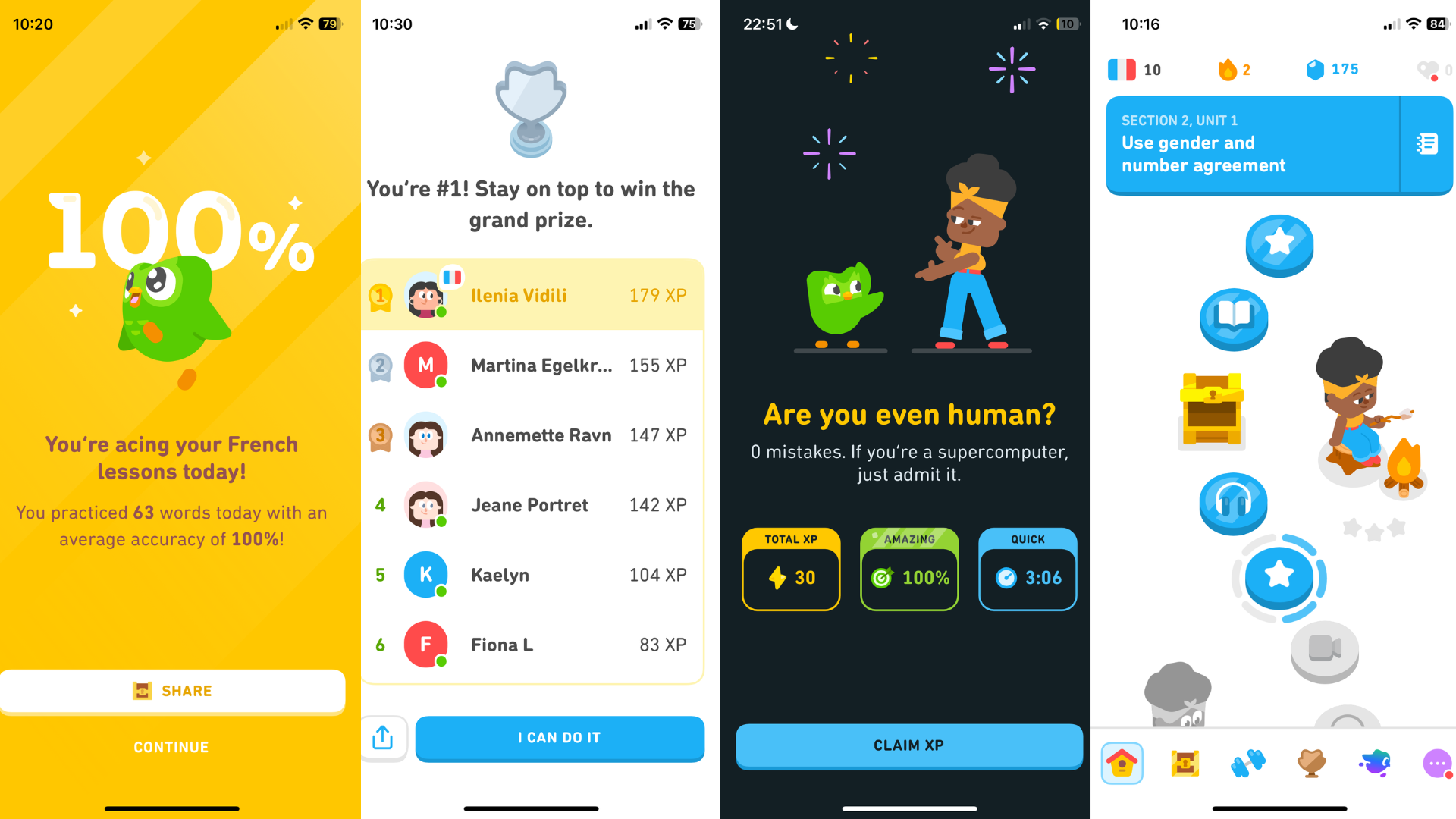
The Commitment Device: Each day, that streak counter creates what economists call a commitment device, a psychological tool that helps us stick to our goals. I’m currently on a 47-day streak, and the thought of breaking it genuinely pains me.
Micro-Learning Architecture: Each lesson feels like a 5-minute mini-game, with points, badges, and cheerful sounds rewarding your progress. This micro-learning approach meets customers where they are: in their phones, their routines, and their busy lives — at war with digital distractions. Suddenly, practicing French feels more like playing a game than studying.
Social Reinforcement: Learning a language isn’t purely about memorising words, there’s a big social and motivational component. Duolingo built a social layer into the experience, a network of forums, clubs, and live events. It recognised that people build habits more easily when they feel part of a community or friendly competition.
Streaks, micro-lessons, and social hooks aren’t just fun, they form a deliberate customer retention strategy.
The AI Revolution Behind the Scenes
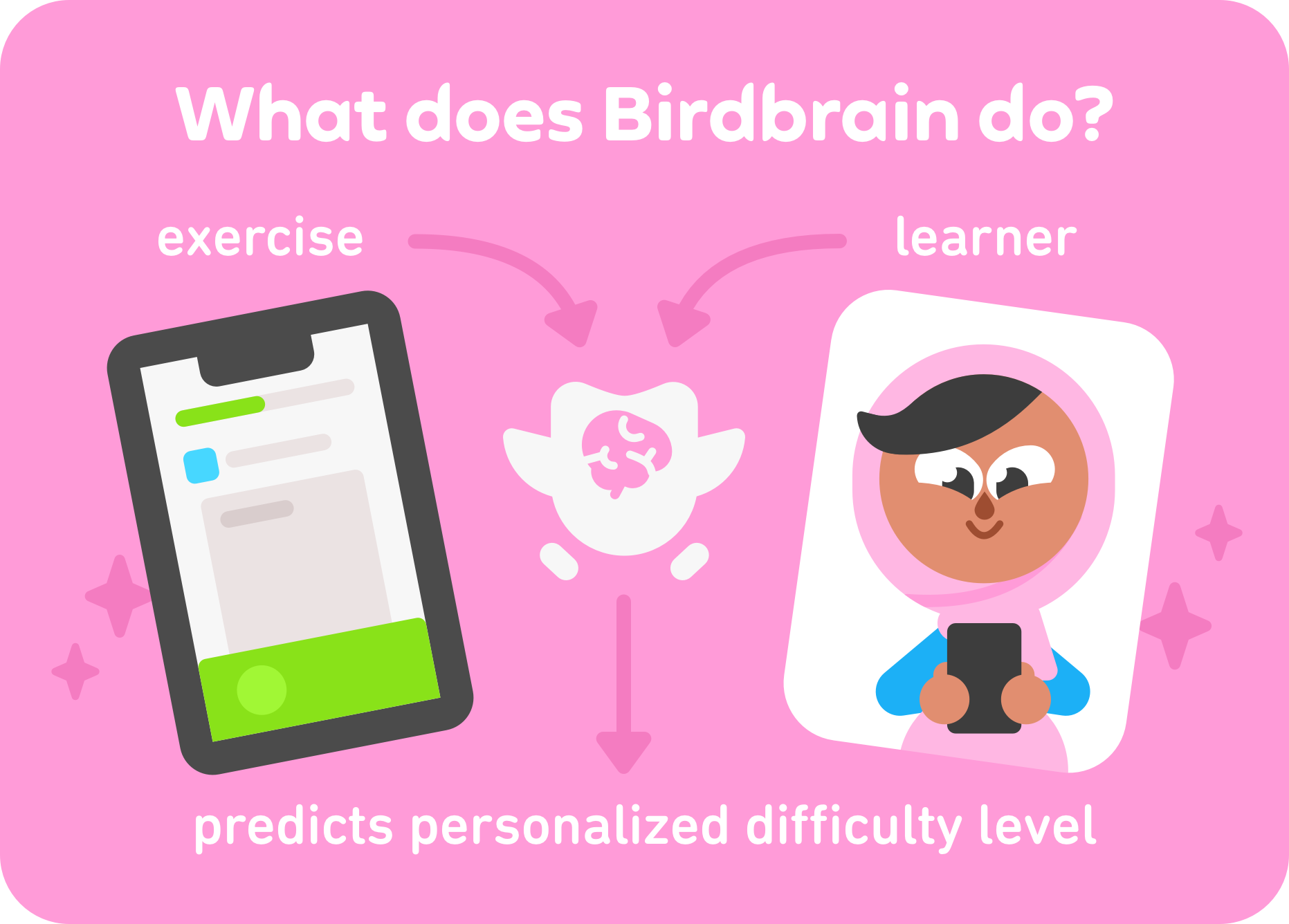
Duolingo leverages its massive user base to improve the product daily. With millions of users completing exercises every day, it has a mountain of data on what works in language learning. Duolingo AI “Birdbrain” is the engine behind my personalised learning experience. It analyses how I answer questions and predicts how likely I am to remember a word or get an exercise right. If I am breezing through a topic, the app will serve me tougher sentences; if I’m struggling, it will adjust and give me extra practice on the basics. Duolingo AI Birdbrain fine-tunes the lessons in real-time for each learner, making the experience feel almost like a personal tutor. This personalisation drives what education researcher Benjamin Bloom identified as the “2 Sigma Problem” – achieving results close to one-on-one tutoring combined with mastery of learning techniques.
The more people use Duolingo, the smarter Birdbrain gets at optimising lessons. It’s a virtuous cycle that traditional education models just can’t match. The true innovation here isn’t just using AI for education but creating an experience that feels human despite being powered by algorithms. Every congratulatory message and review session comes from data science working invisibly in the background.
Thinking Like An App
In the early years, Duolingo opened up an Incubator program that let volunteers contribute to building new language courses. Fans of Irish, Hawaiian, and Navajo joined in free to create lessons, driven by the passion to share their language. This co-creation approach meant Duolingo could offer languages that big companies wouldn’t invest in and do it at a fraction of the cost. While traditional firms hired linguists and built everything in-house, Duolingo built a community-powered ecosystem. That’s smart business: connecting those with knowledge to those who need it through tech. I explored this kind of co-creation strategy in depth in my book Journey to Centricity, where I highlight how the smartest organisations don’t just build for their customers — they build with them.
Beyond Languages
I remember how dreadful learning math was. I was never cut out for numbers. I always wished there had been a better way. Duolingo realised its “fun + effective” formula could apply to more than languages. People began asking: why can’t math or music be just as fun? In response, Duolingo began expanding into other subjects.
The same cheerful characters, bite-sized lessons, and gamified exercises are now teaching multiplication and musical notes. It saw an opportunity to become a one-stop learning platform. My 17-year-old sister struggles with math anxiety, but a gamified math app like Duolingo helps her see numbers as a game, not a threat. A language learner might plateau or finish a course, but now Duolingo can offer them a math or music course next, keeping them in the ecosystem.

By building a massive user base through free language learning, Duolingo created what business strategist Sangeet Paul Choudary calls a “platform gravity field” – where the more value a platform provides, the more naturally users stay, return, and expand their engagement.
What’s interesting is how Duolingo identifies gaps in traditional education to tackle. Take music education as an example. Duolingo noted that over 3.6 million students in the US don’t have access to music classes as private music lessons can cost a lot.
Designing for Humans, Not Just Function
At the heart of Duolingo’s triumph is a simple insight: people stick with products that make them feel good, not just those that work on paper. Traditional solutions in education, and indeed in many industries, focus on the functional need – teaching the materials and delivering a service. But they often neglect the emotional side of the experience. Duolingo showed that meeting those deeper needs is what truly drives engagement. The app makes users feel happy, confident and included. It’s no surprise users often say they find Duolingo “addictive” – it’s fun, it’s encouraging, and it fits into daily life.
If you lead a business today, this should make you pause.
Usage comes from how it feels, not just what it does. Duolingo is designed for humans with busy lives, short attention spans, and a need for joy and connection. This is a wake-up call beyond education.
Whether it’s banking, health, or retail, ask yourself: Are we only meeting the functional needs, or also the emotional needs of customers?

Rethink, Reimagine, and Relearn
My French refresher journey ended up teaching me much more than verb tenses. It taught me that any industry can be reinvented with a bit of creativity and courage. An owl on a phone screen reminded me that innovation is about reimagining experiences to delight people, not just making things more efficient or adding more features. Duolingo is a story of being customer-centric to the core: meeting learners where they are, sparking their motivation, and constantly evolving with their needs.
As I find myself checking the app several times daily to see where I sit on the leaderboard, eagerly completing lessons between meetings, or while waiting for the next flight, it makes me think: disruption happens when companies question fundamental assumptions about how things “should” work. The most dangerous phrase in business remains “we’ve always done it this way”.
Duolingo didn’t just change language learning — it rewrote the rules for earning attention, trust, and loyalty. I think the biggest question we should ask is: are we building products and services that fit into people’s lives or asking people to fit into our business?
_________
P.S. Book me for your next keynote, masterclass, or executive advisory!
➤ Take my LinkedIn Learning courses
➤ Get a copy of my book
-
The Fallacy of Market Dominance: How Kagi Challenges Google by Putting Users First
For decades, Google has been the undisputed gatekeeper of the internet. It has shaped how we find information, navigate the web, and even understand the world. With over 90% market share, it seemed untouchable—so deeply embedded in our daily lives that imagining an alternative felt impossible.
But history tells us something different: no empire lasts forever.
Today, Google’s dominance is showing cracks. Users are frustrated with cluttered results, invasive tracking, and manipulated search rankings. While Google is still the most powerful search engine, a quiet shift is happening. Kagi, a challenger with a completely different approach, is proving that search can be reimagined—not for advertisers, but for users.
How Google’s Success Became Its Weakness
Google’s original mission was simple: “To organise the world’s information and make it universally accessible and useful.”
For years, it delivered on this promise. It became the foundation of the internet, a tool that connected people to knowledge instantly.
But power breeds complacency.
Over time, Google’s focus changed. Search was no longer built for users—it was built for advertisers. Ads took over the top results, pushing valuable content further down the page. SEO-driven content farms flooded search with low-quality but algorithm-friendly articles. AI-generated snippets, often pulled from unreliable sources, prioritised speed over accuracy.
Google faced antitrust lawsuits, regulatory scrutiny, and a growing distrust in its motives. Users started noticing and privacy concerns grew.Google is falling into what Clayton Christensen calls The Innovator’s Dilemma—where dominant companies, focused on sustaining their existing business models, leave gaps for smaller, more agile challengers to exploit. In doing so, they leave themselves vulnerable to disruptors—smaller, more agile players like Kagi, which focus on user needs over financial incentives.
This is how market leaders fall—not overnight, but through a slow loss of trust and relevance.

Can Google Change Before It’s Too Late?
The emergence of Kagi is a lesson for every business that assumes it will always be on top. Complacency is the silent killer of great companies. The moment a business prioritises profits over users, it creates an opportunity for challengers.
Behavioural economist Daniel Kahneman’s ‘Loss Aversion’ theory explains why people resist change—even when a better option exists. Users could hesitate to leave Google because they perceive ‘free search’ as something they don’t want to lose. However, history shows that once users experience a better, more private model they rarely go back. As we’ve seen with industries like streaming (Netflix replacing ad-supported TV), music (Spotify disrupting piracy) and search is next.
Now, Google faces a critical question: Can a company so deeply tied to advertising ever return to a user-first model? Or will its decline be slow and unnoticed—until one day, it simply feels… irrelevant?
Kagi is Rewriting the Rules of Search
I don’t think Kagi is trying to replace Google. Instead, it’s proving that search can be better, simpler, and more private.
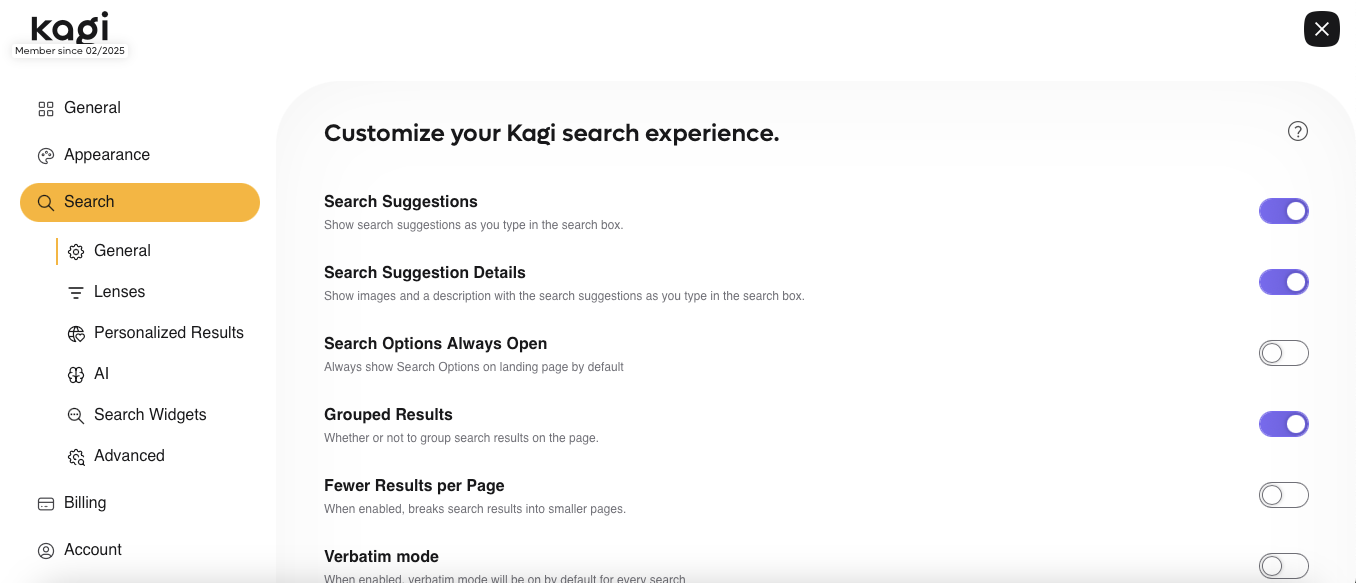
Unlike Google, Kagi does not rely on ads, tracking, or engagement-driven algorithms. Instead, it operates on a subscription-based model, eliminating the need to monetise user data. The experience is fast, clean, and distraction-free. There are no paid placements, no behavioural tracking, and no incentives to manipulate results. Instead, search is what it was meant to be: a gateway to knowledge rather than a gatekeeper of information.
Kagi does not need to win over every Google user—it only needs to serve the growing group of people tired of being the product. That’s how real disruption happens—not by attacking a giant head-on, but by offering something the giant can no longer provide.
Stephen M.R. Covey, in ‘The Speed of Trust,’ argues that trust is a competitive advantage. When users trust a company, decision-making speeds up, loyalty strengthens, and brand advocacy increases. Kagi is betting on this principle, designing a search engine that removes commercial bias, respects privacy, and builds trust as its core business model. This aligns with my LinkedIn Learning course on customer trust, where I explore why trust is no longer just an ethical consideration but a business necessity. Companies that fail to establish trust face higher friction, slower decision-making, and a weaker brand reputation.
The Future of Search
Google’s search model is outdated. The next era of search will be built on trust, transparency, and user control. Here is my view:
Personalised but Private
For years, personalisation has meant giving up privacy. Google tracks every search, click, and query to create user profiles—mainly for advertising. The next generation of search will provide relevant results without surveillance. Subscription-based models, like Kagi, will eliminate the need for data collection entirely, proving that search doesn’t have to be free to be better.
Fast, Efficient, and Free from Commercial Bias
Google’s search results prioritise advertisers, not users. Sponsored results and algorithmic gaming force users to sift through ads before finding what they need.
The next wave of search engines will focus on speed, efficiency, and neutrality. Instead of ranking information based on who pays the most, search engines will rank results based on quality, credibility, and user-defined preferences. Companies like Kagi and Brave Search are proving that ad-free models provide better results—and users are willing to pay for them.Serve users or be replaced
Search engines control what we see and what we don’t. Algorithms decide rankings, shaping public opinion, business success, and even political narratives. But what if users had full control over their search experience? The future of search will allow users to customise ranking criteria, prioritise independent sources, filter out clickbait, and select ethical brands over ad-heavy platforms. Decentralised search models could emerge, breaking the monopoly of search indexing and ensuring that no single company controls the world’s information.
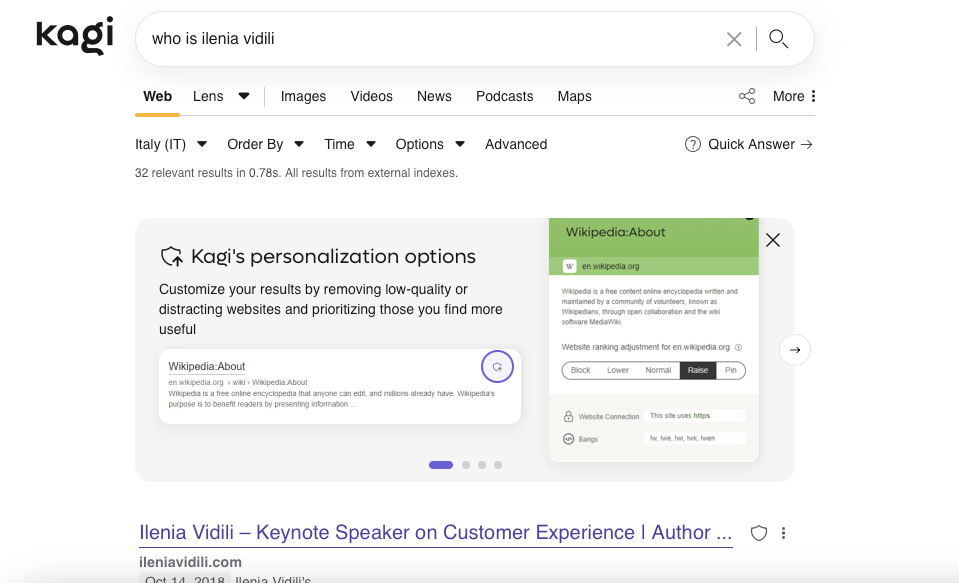
This shift is already happening. Kagi’s “lenses” feature lets users filter content, providing a more tailored, unbiased search experience. As this movement grows, search will no longer be dictated by a few powerful entities—it will be shaped by individuals, bringing trust and transparency back to the centre of information discovery.
Conclusion
Market dominance means nothing if a company forgets who it serves.
The biggest companies are not always the best. Customer relationships—not algorithms—are the real competitive advantage. And the moment a company takes its users for granted, it starts its decline. If Google—the most powerful company of the internet age—can be challenged, any company can.The only question is—who’s next?
What Do You Think?
– Would you pay for a better search experience?
– Can Google adapt, or is its decline inevitable?Let’s discuss.
Ilenia Vidili
P.S. Book me for your next keynote, masterclass, or executive advisory!
-
The Role of Generative AI in Social Media Customer Service
This article was originally published on Sprinklr
In this article, Ilenia Vidili, CX Thought Leader, emphasizes how generative AI, especially in social media, is revolutionizing customer support by providing real-time, personalized responses. The integration of AI not only enhances customer satisfaction but also streamlines the workload for human agents, ensuring a more efficient and effective service experience.
From the first customer support team in the 1760s, after the Industrial Revolution, to the first-ever call center in the 1960s, the customer service department has evolved significantly. As technology evolved, so did customer expectations, which led to shifts in the mechanisms for customer support and reshaped the way customer queries are handled. In the past, businesses weren’t intentionally focused on customer service as a differentiator and prioritized product quality and price. Fast forward to today, when the customer service department has progressed from manual switchboards to multichannel operations, savvy companies understand that customer service is a source of competitive advantage.
Read the full article here
-

Earning Trust and Customer Capital Through Integrity
This article was originally published on CXO Magazine
There is a common disconnection in the business world on how a company earns trust. 🤔
Business leaders believe that emphasizing their product or service earns trust, while stakeholders believe that trust is earned by emphasizing integrity
In this article, I discuss how to earn trust through integrity:
🔹 Leading with integrity > is there alignment between your promises and your actions?
🔹Integrity beyond profits > are your strategies based on long-term thinking that goes beyond maximizing shareholder value?
🔹 Integrity beyond products > consumers also care about why and how a product and service is soldRead the full article here
-

How to Reduce Tech-Related Stress for Customers and Employees
This article was originally published on Entrepreneur Europe.
The excitement to adopt the smartest interface is pushing businesses to lose their focus on two important things: employees and customers. Your ability to become a successful company of the future depends on developing a cultural mindset that is focused on creating value for the people inside and outside the organization. The myth that technology drives digital transformation has been an ongoing fairy tale because while technology is an important factor, there is another element to the equation that creates a strong dependency on the first — the people.
Technology in most ways has a positive effect on business operations, especially in the automation of admin processes that come with communication with customers. While artificial intelligence is getting to know your customers by analyzing their wants and needs, it also means collecting huge amounts of customer insights…
Read the full article here.
To know more about customer-centricity register for the release of my book “Journey to Centricity“
-
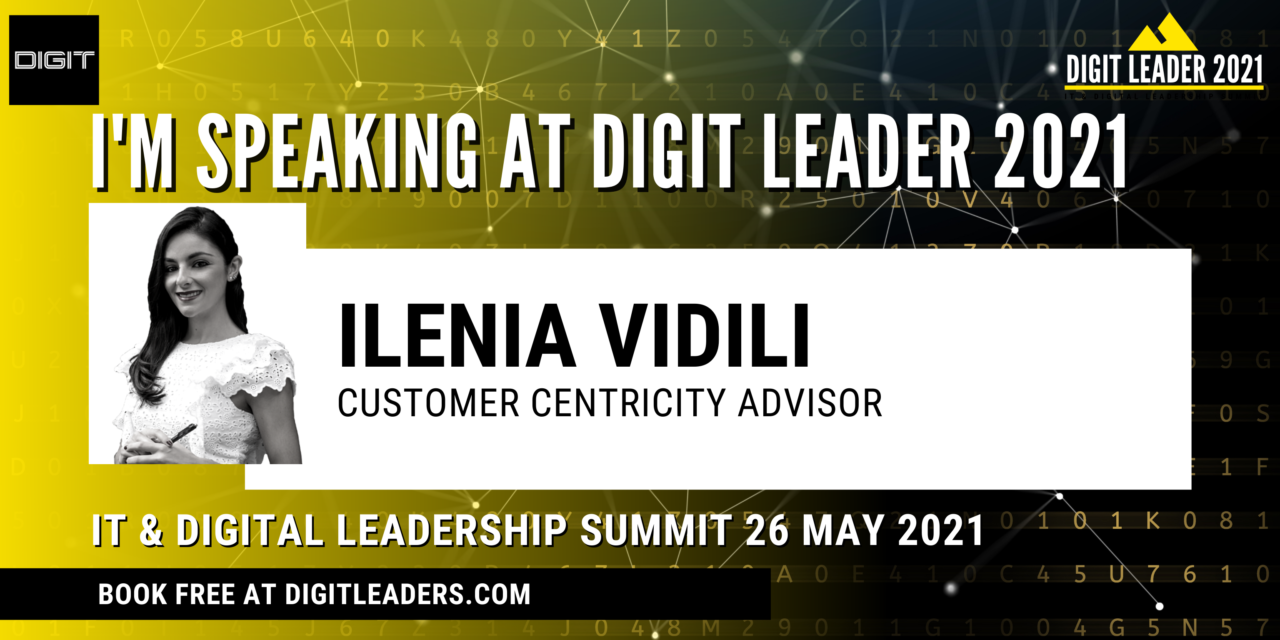
Leader Insights | Evolving Customer Sentiments with Ilenia Vidili
This article was originally published on Digit.fyi
Customer-centricity advisor Ilenia Vidili discusses the key trends in consumer sentiments and behaviour ahead of the fifth annual DIGIT Leader Summit.
The world has never been static and customer sentiments have always evolved in reflection of the changing nature of society. But a year of massive social upheaval has caused some of the largest shifts in consumer behaviour in a generation.
While coronavirus has had a profound effect on society, many of the changes began before anyone had heard of Covid-19. Digital transformation and declining trust in institutions were largely accelerated, not created, by the pandemic.
And ultimately, these were accompanied by increased social isolation, along with growing health and safety concerns. One of the end results of these trends is the rise of the purpose-driven, values-led consumer.
Read the full article here.
To know more about customer-centricity register for the release of my book “Journey to Centricity“
-

How is a new electric automotive brand keeping ahead of the curve? A successful customer experience example by Polestar
This article was originally published on CEOWORLD magazine.
While tech giants such as Airbnb, Amazon, and Uber keep raising the bar on successfully delivering their customer experience, the automotive industry has been lagging behind due to its resistance to adapt to the digital consumer. The automotive sector of the future can be very different from that of the past and of today. Those car brands that are eager to remain relevant to the digital consumer are going to be able to make the next age of mobility.
As a Millennial, in 36 years of my life, I think I entered a car dealership only once. How are car brands interacting with consumers like me who expect nothing less than a reliable and hassle-free service, personalised omni-channel communication, a fully digital experience and real-time social-media interactions? As I am currently writing my book on customer-centricity, I am interested to know how Polestar, a Swedish new electric car brand owned by Volvo, is doing in this regard. Tim Heldmann, Chief Marketing Officer, shared how Polestar is putting their customers at the centre of their business strategy and enhancing customer experience through connectivity.
To know more customer-centric case studies register for the release of my book “Journey to Centricity“
- 1
- 2