
How much time is left for banks? The lost battle of incumbent Barclays vs agile “neobanks”
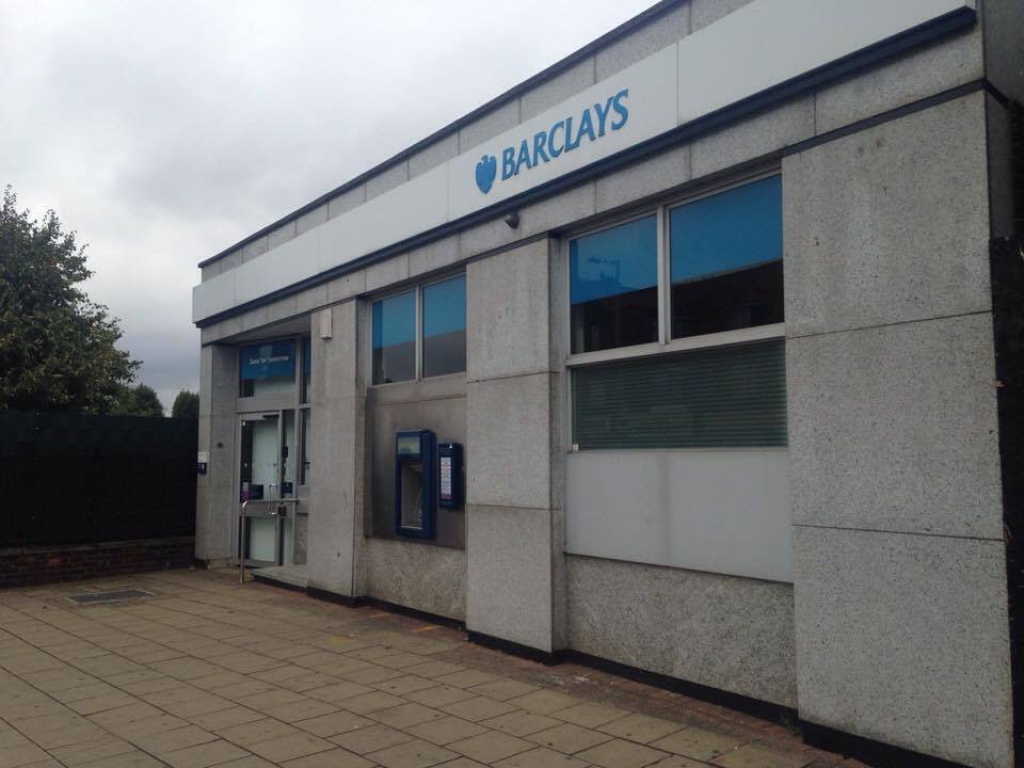
For centuries banks only cared about moving money and being profitable. Today the banking sector is facing a challenging transformation that keeps banks and financial institutions on their toes.
A few things are reshaping the banking sector to the point that banks need to make it their priority to fundamentally rethink their business model and digitally transform for better value propositions. The advancement in technology and sophistication of the mobile phone is changing the way consumers are storing and managing their financial resources, and dealing with their banks overall. Customer expectations are higher than ever even in the financial space.
Over 100 ‘neobanks’ have launched in the past few years globally. Britain is leading the way in Europe for number of neobanks including Monzo, Revolut and Starling Bank. Monzo alone has opened 1.6m bank accounts to date and Starling Bank offers personal joint accounts as well as business accounts. Neobanks have flourished especially in the United Kingdom and the main reason is because traditional banks are notorious for not offering very effective or high-quality service and for having an aggressive behaviour that over the decades has wrecked individuals and businesses.
The UK’s biggest high-street banks provide the worst customer service to their customers and have a long way to go to become as agile and customer-centric as their competitors’ newcomers. Consumers are still cautious of these new start-ups but fed up of their existing bank’s behaviour. According to a research study carried out by Forbes about the World’s Best Banks, in Britain neobank Starling, employer of only 380 employees and trading since only 2016, ranked in first position while giant and established Barclays ranked in 12th position, out of 15 total banks in Britain (1).
I couldn’t agree more with this, in fact, I too experienced the worst customer service ever with Barclays UK during my holiday in Bali, Indonesia.
My credit card was blocked as a result of a supposed fraudulent activity attempt which turned out to be a recurrent direct debit payment and was, therefore, a system failure. All my direct debits were declined and my card refused to pay the rest of my holiday, including the accommodation fees causing a huge nightmare.
As soon as I realised of the issue I contacted the customer service department that tried to replace my card, but even though I had provided an Indonesian postal address they somehow decided to send the replacement to my house in the UK. Why would I need the replacement in the UK if I was “enjoying” my holiday in Bali? Ten days had gone by and after a few more hours of customer service, where I was annoyingly verified multiple times and bounced back and forth from one department to the other, I was finally sent an emergency card by Visa which was supposed to take only 48 hours. After four entire days of waiting and frustration my emergency card finally arrived, only to discover the reality that it didn’t work in any ATM, retail or online transaction. A few more hours over the phone with the customer service and my patience had hit rock bottom. I was reassured of receiving a new fully functioning replacement of the credit card as soon as possible but unfortunately, my luck of Barclays customer service wasn’t on my side of the table, once again I was sent a useless replacement to my UK address.
Twenty days have gone by and to date, I still haven’t received a solution. I had to transfer all my available funds from my other Barclays accounts to my Revolut account as I have lost trust in the bank that attempted to serve me well for years. I have explained my anger and disappointment to one of Barclays UK’s Customer Relationship Managers who kindly offered a skinny £50 compensation for the inconvenience!
After the shocking treatment, I can’t wait to close all my Barclays bank accounts as Barclays failed big time in serving its purpose and I don’t believe it deserves my customer loyalty any longer. The time when large corporations like Amazon and Facebook could provide a much better service and customer experience that a bank provides is coming closer and closer. Amazon is providing payment services and loans to merchants on its platform, while Facebook has an electronic money licence in Ireland (2).
Barclays has ranked one of the worst UK banks for nearly a decade now and doesn’t seem to understand that failing their customers is only going to be very damaging in the long term. Customers are fed up with poor customer service, confusing fees and unclear unauthorised overdrafts. Most banks don’t consider the importance of providing an excellent customer experience. We customers now expect interactions to be simple, intuitive and seamlessly connected across physical and digital touch-points. The banks that are trying to meet these expectations are struggling to keep pace with the changes in customer expectations and merely making time to deliver the experience “not bad” for us rather than “excellent”.

In the highly competitive and disruptive financial sector, simply good enough is not good enough; the few leaders in the retail banking that offer excellent experiences really make an impact on their customers. These well-established incumbents attract new customers and deepen relationships with their existing customer base. As a result, only a few banks are true leaders in providing the experience that we are looking for and neobanks are catching up very fast in the battlefield.
In its special report about the banking system The Economist claims that “if the incumbents want to fight, the customer relationship is theirs to lose. The biggest benefit for customers will come from a rethink of what banks are supposed to do” (3).
What is holding the banking system back? Lack of a clear digital strategy, bad customer service, lack of customer-centric culture and inability to adapt to rapid technological changes are holding the banking system back. Most of the incumbent banks still rely on an IT system that was installed in the 1970s, 1980s and 1990s (4).
Those banks that seem concerned about the implications that the digital revolution is creating don’t appear to take action to the challenge, in fact, according to a study carried out by The Economist, the majority of bankers (54%) believe that banks are either ignoring the challenge or that they “talk about disruption, but are not making changes” (5).
The banking system is probably the only sector that has not kept pace with the improvements in customer experience that are shining in other consumer sectors. Most banks offer similar products, features and lack of customer care. What’s there for them to differentiate and provide value to their customers in this hyper-connected and digital space? The only banks that are standing out for innovation in customer interaction models are the emerging neobanks.
Neobanks are becoming the leaders in experience and understand that digitization is not just about creating a top-notch mobile user experience but customer satisfaction end-to-end shapes an outstanding customer experience that keeps customer loyalty rate high. The decline of customer loyalty among banks makes a perfect context for neobanks entering the banking sector. They have proved that despite the fact that banks have access to a wider customer base they can successfully compete on customer experience and lower fees.
No doubt, digital technology is reshaping banking for the better but are banks even trying to keep up with adapting to the technological changes and providing a customer-centric experience to customers?
Experiences should be seamless across all channels such as opening a new account, issue resolution and include the customer acquisition shift from physical to digital channels. The adoption of the use of new technologies such as artificial intelligence and natural language processing to automate customer-facing interactions coupled with successfully responding to consumers preferences is the winning ground for brands that are struggling to survive in this hyper-competitive battlefield. The newcomers are not only challenging banks on the lower fees and high tech abilities but especially on their business model that put customers’ needs first and on the fact that they are on the customer’s side rather than on the money making side.
***
References:
- Forbes – The World’s Best Banks 2019
- Financial Times – Five ways banks are responding to the fintech threat
- The Economist – The banking revolution is great for customers, 2019
- McKinsey & Company – Rewriting the rules: Succeeding in the new retail banking landscape, 2019
- The Economist – The Disruption of Banking, 2015